


12 Essential Facilities Management Best Practices for 2026
For contractors and industrial facility managers in San Luis Obispo County, from Paso Robles and Atascadero down to Santa Maria and Nipomo, keeping equipment running is non-negotiable. Unplanned downtime is more than just a minor inconvenience; it is a direct and costly hit to your bottom line, causing project delays, budget overruns, and damage to your professional reputation. Mastering a set of proven operational strategies is the key to maximizing equipment uptime, extending asset life, and ensuring every project remains profitable and on schedule.
This guide moves beyond generic advice to provide a comprehensive roadmap of 12 critical facilities management best practices. Our goal is to help you transform your maintenance operations from a reactive, unpredictable cost center into a proactive, strategic advantage that drives efficiency and growth. Each point in this listicle offers actionable steps and practical insights designed for real-world application. Whether you're managing a fleet of Graco paint sprayers for a project in Arroyo Grande or maintaining Multiquip compactors for a job site in Templeton, these principles will help you build a more resilient and profitable operation.
You will learn how to implement robust preventive maintenance programs, leverage modern management systems, and optimize everything from parts inventory to vendor relationships. For specialized needs, particularly with high-pressure fluid handling equipment, Contractor's Maintenance Service offers expert support across the Central Coast to implement and manage these best practices effectively. Let's explore the strategies that will elevate your operational performance to a new level.
1. Preventive Maintenance Programs
A cornerstone of modern facilities management best practices is the shift from reactive, break-fix cycles to proactive, preventive maintenance (PM). This systematic approach involves regularly scheduled inspections, servicing, and component replacements to prevent equipment failure before it happens. Instead of absorbing the high costs of unexpected downtime, a PM program extends asset lifespan, enhances operational reliability, and ensures safety.
For contractors and industrial facilities managing high-value assets like paint sprayers, pressure washers, and compressors, this isn't just a good idea; it's a financial necessity. A single critical failure during a project can lead to costly delays, wasted labor, and reputational damage.
How to Implement a PM Program:
Create a Master Schedule: Develop a maintenance calendar based on manufacturer recommendations, operational hours, or seasonal usage. For example, a commercial painting contractor might schedule monthly pressure washer engine oil changes and quarterly pump seal inspections.
Maintain Detailed Service Logs: Meticulously document every service activity, including dates, parts used, and technician notes. This documentation is crucial for validating warranty claims and demonstrating compliance with safety standards.
Leverage Technology: Use fleet management software or a Computerized Maintenance Management System (CMMS) to automate maintenance reminders, track service histories, and manage parts inventory.
Key Insight: A robust PM program transforms maintenance from an unpredictable expense into a controlled, predictable operational cost, providing a clear return on investment through maximized uptime and asset longevity.
Partnering with an authorized service center like Contractor’s Maintenance Service streamlines this entire process. We manage PM schedules and handle warranty claims for leading brands like Graco, Wagner, and Titan, ensuring your equipment receives expert care. For businesses in San Luis Obispo, Paso Robles, Atascadero, and the surrounding Central Coast areas, this local expertise minimizes transit time and keeps your operations running smoothly. For a deeper dive into building your own plan, explore our detailed equipment preventative maintenance checklist.
2. Computerized Maintenance Management Systems (CMMS)
Implementing a Computerized Maintenance Management System (CMMS) is a foundational step in modernizing facilities management best practices. This software acts as a central digital hub, organizing and automating everything from work order generation and asset tracking to inventory management and historical data analysis. A CMMS replaces scattered spreadsheets and paper records with a single source of truth for all maintenance operations.
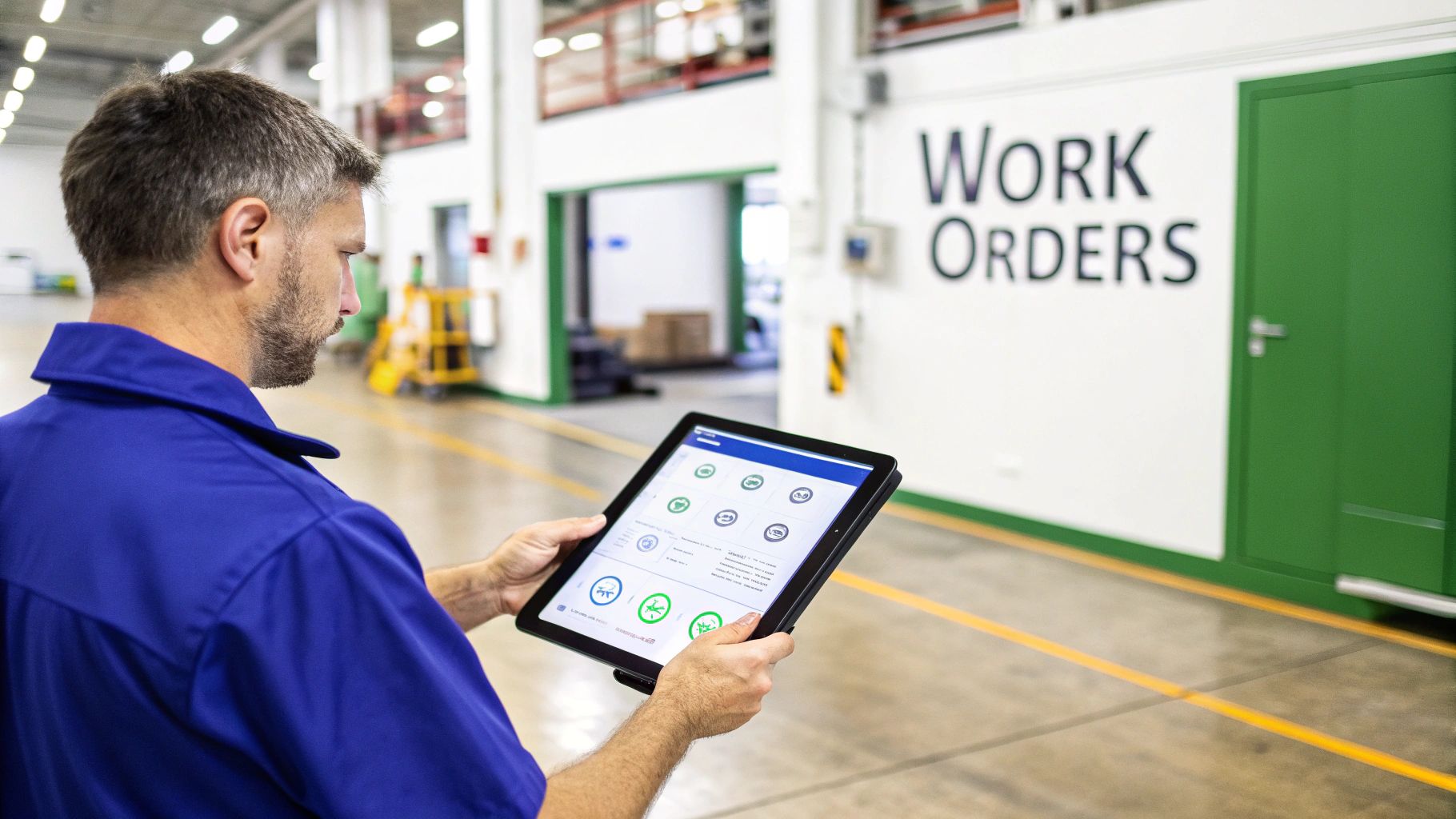
For organizations like municipal public works departments managing fleet schedules or industrial facilities coordinating maintenance across multiple sites, a CMMS is indispensable. It provides the data-driven insights needed to optimize labor allocation, control parts spending, and make informed decisions about equipment repair versus replacement, directly impacting operational efficiency and profitability.
How to Implement a CMMS:
Start with Critical Assets: Begin by inputting your most vital equipment, like high-output airless sprayers or generators. Gradually expand the system to include all assets as your team becomes more familiar with the software.
Establish Data Standards: Create clear, consistent guidelines for data entry, including naming conventions and required fields. Assign specific team members the responsibility for maintaining data integrity to ensure reports are accurate.
Leverage Mobile Access: Choose a CMMS with a robust mobile app. This allows technicians to update work orders, log parts used, and upload photos directly from the job site, providing real-time operational visibility.
Key Insight: A CMMS transforms maintenance from a cost center into a strategic, data-driven operation. It provides the visibility and control needed to reduce downtime, cut costs, and improve overall asset performance.
While a CMMS organizes your internal workflow, partnering with a specialist ensures the work itself is done to professional standards. Contractor's Maintenance Service integrates seamlessly with your management system. We provide expert, documented service for brands like Graco, Titan, and Mi-T-M, ensuring your CMMS data reflects accurate, warranty-compliant maintenance history. For businesses in San Luis Obispo, Paso Robles, Atascadero, and the greater Central Coast region, our local service provides the reliable, expert support you need.
3. Inventory Management and Parts Stocking Strategy
An effective facilities management best practice is developing a strategic approach to inventory and parts stocking. This involves maintaining optimal levels of critical maintenance parts to balance cost-efficiency with equipment availability. Instead of scrambling for a specific hose or nozzle during a breakdown, a well-planned parts strategy ensures components are on hand, minimizing downtime and keeping projects on schedule.
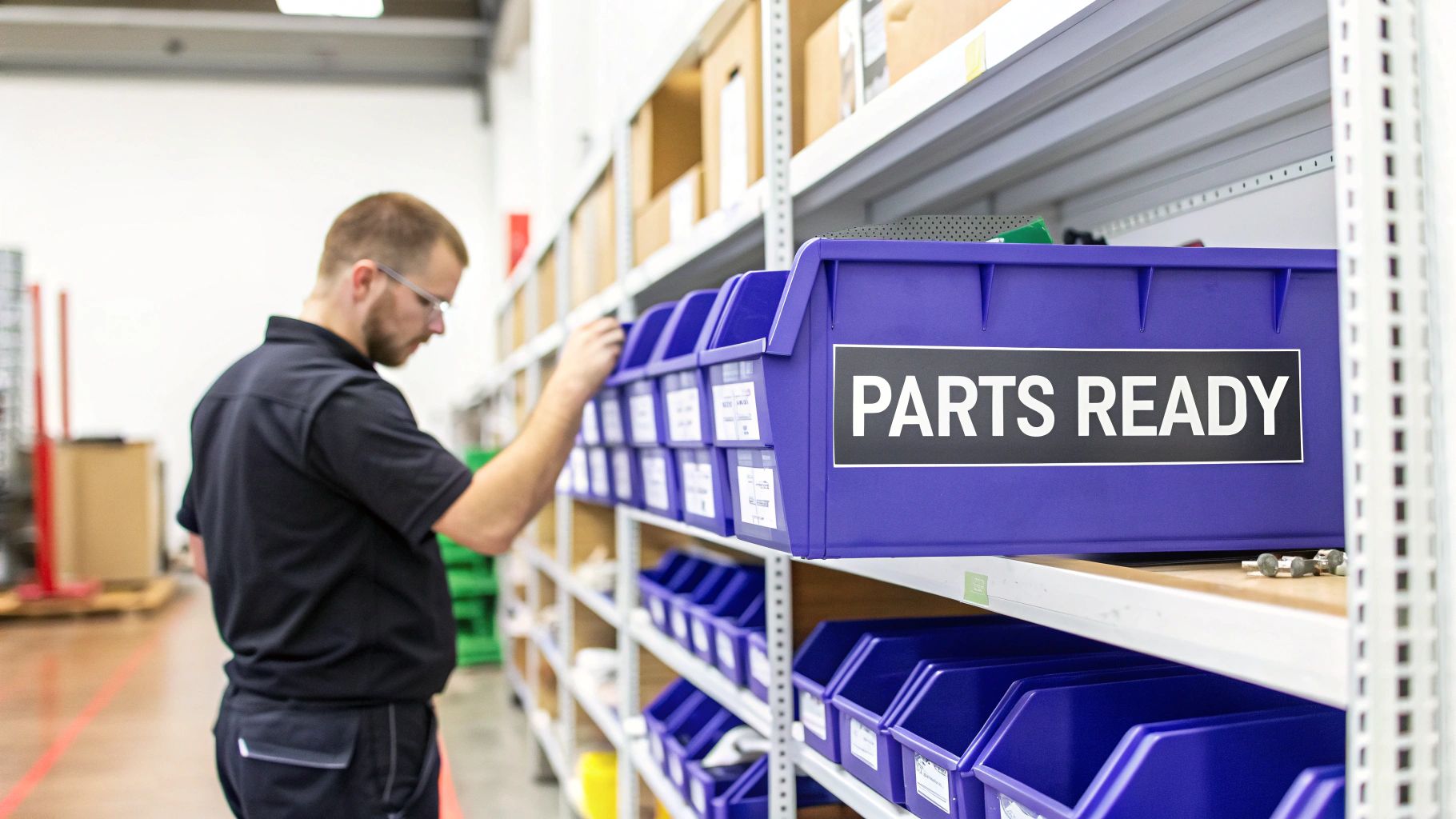
For a commercial painter, having the right spray gun repair kit in the truck can save a day's labor, while a public works department needs ready access to seasonal maintenance supplies. This proactive stocking prevents delays and turns a potential crisis into a quick, routine repair.
How to Implement a Parts Stocking Strategy:
Analyze Usage and Criticality: Implement an ABC analysis to categorize parts. 'A' items are critical and high-use (e.g., sprayer packings), 'B' are moderately important, and 'C' are low-use. Focus inventory budget and space on 'A' items.
Establish Par Levels: For high-failure components like pressure washer hoses or pump seals, set minimum reorder points (par levels). When stock hits this level, an automatic reorder is triggered.
Document Everything: Maintain a precise log of part numbers, specifications, and suppliers for every piece of equipment. This eliminates guesswork and speeds up procurement during an emergency.
Key Insight: Strategic inventory management shifts parts procurement from a reactive, emergency-driven cost to a controlled, proactive investment in operational readiness and minimized downtime.
Contractor’s Maintenance Service helps businesses across the Central Coast, including San Luis Obispo, Paso Robles, and Atascadero, by stocking a curated inventory of genuine parts for Graco, Wagner, and Titan. By working with an authorized service center, you gain priority access to the most critical components, ensuring your equipment is supported by a reliable local supply chain. We help you identify essential parts for your fleet, streamlining your inventory management.
4. Condition-Based Maintenance (CBM) and Predictive Maintenance
Moving beyond fixed schedules, an advanced facilities management best practice involves using real-time equipment data to perform maintenance precisely when needed. Condition-Based Maintenance (CBM) and its more sophisticated counterpart, predictive maintenance, use sensors and performance monitoring to detect early signs of degradation. This data-driven approach allows you to intervene before a failure occurs, based on the actual condition of the asset rather than a generic calendar.
For industrial facilities with high-value assets, this strategy is transformative. Imagine a compressor’s vibration signature changing slightly, or an airless sprayer’s pressure fluctuating outside its normal range. CBM detects these anomalies, triggering a service alert to address the root cause, preventing catastrophic failure and costly emergency repairs. This is maintenance at its most efficient, targeting resources only where they are required.
How to Implement a CBM Program:
Establish Performance Baselines: First, determine the normal operating parameters for your critical equipment. This could involve tracking a paint sprayer's temperature and pressure or a generator's oil purity under typical loads.
Deploy Monitoring Technology: Start by implementing sensors on your most critical or failure-prone assets. This can range from simple vibration sensors on motors to advanced thermal imaging for electrical panels.
Integrate Data with a CMMS: Feed the real-time data from your sensors into your Computerized Maintenance Management System. This integration automates work order creation when a parameter deviates from the established baseline, streamlining the response.
Key Insight: CBM shifts maintenance from a time-based activity to a need-based intervention, drastically reducing unnecessary labor, minimizing downtime, and maximizing the operational life of every component.
Interpreting complex diagnostic data from brands like Graco, Wagner, and Titan requires specialized expertise. Contractor's Maintenance Service provides this diagnostic support for businesses in San Luis Obispo, Paso Robles, Atascadero, and the greater Central Coast region, helping you turn raw data into actionable maintenance plans. For a deeper comparison of maintenance strategies, explore our guide on predictive vs. preventive maintenance.
5. Equipment Lifecycle Management
A crucial element of strategic facilities management best practices is implementing a comprehensive Equipment Lifecycle Management (ELM) plan. This approach views equipment ownership as a complete cycle, from initial procurement and deployment to ongoing maintenance, and eventual retirement and replacement. By managing the total cost of ownership (TCO), facilities managers can make informed financial decisions that maximize value and minimize long-term expenses.
For businesses that rely on high-value assets, like construction contractors with fleets of pressure washers or painters with specialized Graco sprayers, ELM is fundamental to profitability. It prevents the common pitfall of running equipment until catastrophic failure, avoiding the associated emergency repair costs, project delays, and safety hazards.
How to Implement an ELM Plan:
Establish Replacement Policies: Create clear guidelines for equipment retirement based on factors like age, total operating hours, and accumulated maintenance costs. For instance, a policy might dictate retiring a pressure washer once its annual repair costs exceed 50% of a new unit's price.
Track Total Cost of Ownership (TCO): Use your CMMS or service logs to meticulously track all associated costs, including purchase price, preventive maintenance, repairs, parts, and downtime. This data provides the financial justification for repair-or-replace decisions.
Plan for Disposition: Develop a strategy for retiring assets. This could involve selling used equipment, trading it in for newer models, or responsibly recycling components. Planning this phase maximizes residual value.
Key Insight: Effective Equipment Lifecycle Management shifts the focus from an asset's purchase price to its total lifetime value, enabling proactive budgeting and preventing the financial drain of aging, inefficient equipment.
At Contractor’s Maintenance Service, we provide the data and expert assessments needed to support your ELM strategy. We help businesses in San Luis Obispo, Paso Robles, Atascadero, and across the Central Coast evaluate equipment condition and repair viability. Our detailed service histories for brands like Titan and Wagner give you the TCO insights necessary to decide when it's time to invest in new technology, ensuring your fleet remains productive and profitable.
6. Staff Training and Competency Development
A critical, yet often overlooked, component of facilities management best practices is a systematic program for staff training and competency development. Your most advanced equipment and software are only as effective as the technicians operating and maintaining them. This approach ensures personnel have the current knowledge, skills, and certifications needed to properly service assets, diagnose issues accurately, and adhere to safety protocols, reducing errors and enhancing the effectiveness of your entire maintenance strategy.

For a municipal public works department or an industrial facility, well-trained staff means fewer safety incidents and more reliable public infrastructure. For a commercial painting contractor, a technician certified by Graco or Titan can diagnose a complex sprayer issue in minutes, not hours, preventing costly project delays and rework.
How to Implement a Training Program:
Prioritize Manufacturer Certification: Invest in official training programs from equipment manufacturers. A technician trained by the brand itself understands the specific engineering and common failure points of your high-value assets.
Develop Internal Expertise: Foster a culture of knowledge sharing where senior technicians mentor junior staff. Document standard operating procedures (SOPs) and create quick-reference guides for common tasks.
Schedule Strategically: Plan training sessions during seasonal lulls or low-utilization periods to minimize disruption to operations. Leverage online and video resources for flexible, on-demand learning.
Key Insight: Investing in staff training is not a cost center; it's a direct investment in operational efficiency, safety, and asset longevity. A competent team maximizes equipment uptime and minimizes the risk of expensive mistakes.
At Contractor’s Maintenance Service, our technicians undergo continuous factory training to maintain their status as an authorized service center for top brands. We bring this certified expertise to every repair and maintenance job for businesses in San Luis Obispo, Paso Robles, Atascadero, and the greater Central Coast region, ensuring your equipment is serviced to the highest industry standard.
7. Equipment Documentation and Technical Records Management
Effective facilities management best practices are built on a foundation of accurate information. A disciplined system for maintaining comprehensive equipment records is not just administrative work; it's a strategic asset. This practice involves meticulously cataloging all equipment specifications, maintenance histories, service bulletins, warranty details, and technical manuals. Without this data, maintenance becomes guesswork, warranty claims fail, and compliance can't be verified.
For contractors managing a fleet of airless sprayers or a municipality overseeing public works equipment, these records are indispensable. They prevent duplicate repairs, accelerate troubleshooting, and ensure that knowledge isn't lost when a key team member leaves. Proper documentation is the single source of truth for every asset you manage.
How to Implement a Documentation System:
Create a Standardized System: Establish a consistent digital and physical filing structure for all assets. Use QR codes or RFID tags on equipment that link directly to its digital service history, manuals, and warranty information.
Capture Key Visuals: Photograph all new equipment, paying close attention to data plates with serial and model numbers. This visual record is invaluable for parts ordering and insurance claims.
Track Service Bulletins: Actively monitor and log manufacturer-issued service bulletins and recalls. Attach this information to the corresponding asset's record to ensure safety and performance updates are completed.
Implement Backup Procedures: Regularly back up all digital records to a secure, cloud-based system to protect against data loss. Train all relevant staff on procedures for accessing and updating these critical files.
Key Insight: Comprehensive documentation transforms your equipment from a simple tool into a fully tracked asset, providing the data needed for smarter financial planning, maintenance scheduling, and operational decision-making.
At Contractor’s Maintenance Service, we live by this principle. We manage all warranty and service documentation for brands like Graco, Titan, and Mi-T-M, which is essential for processing claims efficiently. For our clients in San Luis Obispo, Paso Robles, Atascadero, and the greater Central Coast area, this meticulous record-keeping ensures a seamless and transparent service experience every time.
8. Safety Management and Compliance Procedures
A fundamental aspect of facilities management best practices is establishing a robust framework for safety and regulatory compliance. This goes beyond basic rules to create a culture of safety that actively identifies hazards, implements controls, and ensures adherence to standards from OSHA, EPA, and other bodies. For teams working with high-pressure systems, hazardous chemicals, and powerful machinery, this proactive stance is non-negotiable.
Effective safety management directly reduces workplace accidents, lowers workers' compensation costs, and prevents costly regulatory fines. For a contractor servicing a paint sprayer, this means strictly following chemical handling protocols, while for a technician repairing a pressure washer, it involves precise depressurization steps before any work begins. These procedures protect personnel and safeguard the business from liability.
How to Implement Safety & Compliance Procedures:
Develop Equipment-Specific Protocols: Create and post clear, step-by-step safety procedures near relevant equipment. For example, implement Lockout/Tagout (LOTO) procedures for all industrial equipment service to prevent accidental startup.
Conduct Regular Hazard Assessments: Annually review all maintenance tasks to identify potential risks and update safety protocols accordingly. This proactive approach helps address new equipment or evolving operational risks. Integral to this is ensuring an OSHA compliant warehouse design, which engineers safety directly into the facility's floorplan.
Mandate and Document Training: Require personnel to complete certified safety training before working independently on any equipment. Keep meticulous records of all training sessions, toolbox talks, and compliance activities for accountability and verification.
Key Insight: Safety is not an administrative task; it is an operational imperative. Integrating safety and compliance into daily workflows transforms it from a reactive measure into a proactive strategy that protects your most valuable asset: your team.
At Contractor's Maintenance Service, safety is embedded in every repair and maintenance task we perform. Our technicians are trained on the specific safety protocols for brands like Mi-T-M, Landa, and BE Pressure. For businesses in San Luis Obispo, Paso Robles, Atascadero, and the greater Central Coast region, our expertise ensures your equipment is serviced safely and correctly, maintaining a secure operational environment for your staff.
9. Vendor and Service Provider Relationship Management
Effective facilities management best practices extend beyond internal operations to include the strategic cultivation of external partnerships. A proactive approach to managing relationships with equipment manufacturers, distributors, and service providers is essential for operational resilience. Instead of transactional, one-off interactions, building long-term partnerships ensures priority service, reliable access to parts, technical expertise, and favorable terms when you need them most.
For contractors and facilities managers, these relationships are a critical support system. A strong partnership with an authorized service center can mean the difference between a minor hiccup and a full-blown project delay, especially when dealing with warranty claims or complex technical issues.
How to Manage Vendor Relationships:
Formalize Expectations: Document clear Service Level Agreements (SLAs) that outline response times, communication protocols, and performance metrics. This sets a clear standard for service quality and accountability.
Maintain Open Communication: Share your upcoming project schedules and maintenance forecasts with key vendors. This allows them to anticipate your needs for parts and service, preventing supply chain delays.
Conduct Regular Reviews: Schedule periodic meetings with your primary service providers to review performance, discuss challenges, and align on future goals. For comprehensive guidance on optimizing these external partnerships, exploring effective vendor management best practices is essential.
Prioritize Authorized Partners: Work directly with authorized distributors and service centers for brands like Graco, Wagner, and Honda. This guarantees access to genuine parts, factory-trained technicians, and seamless warranty support.
Key Insight: Viewing vendors as strategic partners rather than just suppliers transforms the relationship from a cost center into a valuable operational asset that enhances efficiency and reduces risk.
As an authorized service center and distributor for leading brands, Contractor’s Maintenance Service embodies this partnership model. We provide businesses in San Luis Obispo, Paso Robles, Atascadero, and the greater Central Coast area with more than just repairs; we offer expert guidance, warranty management, and a reliable supply chain. This local partnership ensures your equipment is supported by a team that understands your operational demands.
10. Cost Analysis and Maintenance Budget Planning
Effective facilities management best practices extend beyond technical execution to financial strategy. Cost analysis and maintenance budget planning provide a structured framework for controlling expenses, justifying investments, and ensuring financial stability. This involves meticulously tracking all maintenance-related costs, from parts and labor to outsourced services, and using that data to build an accurate, forward-looking budget. Instead of reacting to unpredictable expenses, this proactive financial management ensures resources are allocated efficiently.
For businesses like construction contractors or equipment rental yards, understanding the true cost of maintenance is critical for profitability. Tracking the maintenance cost per job or per rental day reveals which assets are profitable and which are becoming financial drains, enabling smarter decisions about repair-versus-replace scenarios. This data-driven approach links maintenance activities directly to the bottom line.
How to Implement Maintenance Budget Planning:
Categorize Your Expenses: Track costs by separating planned preventive maintenance from unplanned, reactive repairs. This highlights the financial impact of unexpected failures and helps build a stronger case for PM investments.
Analyze Historical Data: Use past spending records to forecast future needs. For example, a municipal department can analyze previous years' data to budget for the seasonal demands of landscaping equipment or road maintenance machinery.
Establish Cost Benchmarks: Calculate key metrics like maintenance cost as a percentage of an asset's total value or the cost-per-hour of operation. These benchmarks help identify underperforming equipment and measure the effectiveness of your maintenance strategy over time.
Key Insight: Treating maintenance as a strategic, budget-aligned function rather than a reactive cost center is fundamental to operational excellence. A well-planned budget transforms maintenance from a source of financial uncertainty into a predictable and controllable business advantage.
At Contractor’s Maintenance Service, we provide transparent, detailed service records that make cost tracking and analysis straightforward. By managing your maintenance, we help you gather the precise data needed for accurate budgeting, serving businesses throughout San Luis Obispo, Paso Robles, Atascadero, and the California Central Coast.
11. Equipment Reliability and Uptime Metrics
Effective facilities management best practices rely on data, not guesswork. Implementing a system to track equipment reliability and uptime metrics provides the objective data needed to measure performance, justify maintenance budgets, and drive continuous improvement. Key metrics like Mean Time Between Failures (MTBF), Mean Time To Repair (MTTR), and Overall Equipment Effectiveness (OEE) transform abstract goals into tangible, measurable outcomes.
For a commercial painter, tracking the MTBF of their airless paint sprayers can reveal which models are most durable and cost-effective over their lifecycle. Similarly, an equipment rental yard can use uptime percentages to guarantee machine availability for customers, directly impacting revenue and client satisfaction. These metrics are vital for turning maintenance activities into a strategic, profit-driving function.
How to Implement Reliability Metrics:
Standardize Calculations: Define and document exactly how your team will calculate MTBF, MTTR, and availability. Consistency is crucial for accurate trend analysis and benchmarking over time.
Leverage Your CMMS: Ensure your maintenance management software is configured to capture all necessary data points, such as failure dates, repair times, and operational hours, to automate metric calculations.
Analyze and Act: Schedule monthly or quarterly reviews of your metrics. Identify underperforming assets or recurring failure modes and develop targeted action plans to address them, whether through improved PM tasks or operator training.
Key Insight: Tracking reliability metrics provides a clear, data-backed language to communicate the value of maintenance. It proves how strategic investments in parts and service directly impact operational efficiency and profitability.
At Contractor’s Maintenance Service, we provide the detailed service records and expert analysis needed to calculate these vital metrics accurately. By handling repairs and maintenance for brands like Graco, Titan, and Mi-T-M, we help businesses across San Luis Obispo, Paso Robles, and Atascadero gather the data to optimize their fleet performance. Our precise documentation supports your efforts to make smarter, data-driven decisions about your equipment.
12. Hydraulic System Maintenance and Fluid Management
A critical discipline within facilities management best practices involves the specialized upkeep of hydraulic systems. This goes beyond simple oil changes, encompassing fluid analysis, contamination control, filter replacement, pressure monitoring, and preventive hose replacement. For equipment where hydraulic power is the lifeblood, like airless paint sprayers, pressure washers, and compactors, this proactive approach prevents catastrophic failures and protects high-value components.
Neglecting hydraulic health is a direct path to costly downtime and premature equipment failure. Contaminated fluid acts like liquid sandpaper, rapidly wearing down pumps, motors, and seals. A sudden hose failure not only halts a job but also creates a significant safety and environmental hazard. Proper fluid management is therefore essential for operational reliability and safety.
How to Implement Hydraulic System Maintenance:
Establish a Fluid Analysis Schedule: Regularly sample hydraulic fluid to test for contaminants like water and particulates, and to monitor fluid viscosity. This data provides a clear picture of internal system health and indicates when service is needed.
Follow Strict Contamination Control: Use only manufacturer-approved, clean hydraulic fluids. Ensure all containers, funnels, and filling points are spotless to prevent dirt from entering the system during top-offs or changes.
Implement a Proactive Hose Replacement Program: Don't wait for a hose to burst. Replace hydraulic hose assemblies based on age, visible wear (cracks, abrasions), and operational hours to prevent unexpected failures.
Key Insight: Effective hydraulic maintenance is a form of asset protection. By managing the fluid, you are directly managing the health, longevity, and performance of the entire machine, converting a potential liability into a reliable asset.
At Contractor’s Maintenance Service, we provide expert hydraulic system diagnostics, hose fabrication, and component repair. Our technicians understand the specific demands of equipment used by contractors in San Luis Obispo, Paso Robles, Atascadero, and the greater Central Coast. For more help identifying components, check out our ultimate hydraulic fitting types chart and guide.
12-Point Facilities Management Best Practices Comparison
Item | Implementation Complexity 🔄 | Resource Requirements ⚡ | Expected Outcomes ⭐📊 | Ideal Use Cases | Key Advantages & Quick Tip 💡 |
|---|---|---|---|---|---|
Preventive Maintenance Programs | Medium 🔄 — scheduled processes | Moderate ⚡ — technicians, scheduling tools, parts | High ⭐📊 — fewer failures; 20–40% longer life | Routine fleet & high-value equipment | Predictable uptime; Tip: align calendars with manufacturer recs 💡 |
Computerized Maintenance Management Systems (CMMS) | High 🔄 — deployment & integration | High ⚡ — software, training, consistent data entry | Very High ⭐📊 — improved planning, analytics, lower downtime | Multi-site operations, large fleets | Centralized records & automation; Tip: start with critical assets 💡 |
Inventory Management & Parts Stocking | Medium 🔄 — forecasting & reorder rules | Moderate ⚡ — storage, capital, supplier contracts | High ⭐📊 — reduced emergency buys, faster repairs | Parts-heavy contractors, rental yards | Balances availability vs cost; Tip: use ABC analysis & CMMS triggers 💡 |
Condition-Based & Predictive Maintenance (CBM) | Very High 🔄 — sensors, analytics, validation | High ⚡ — sensors, analytics expertise, integration | Very High ⭐📊 — 35–45% fewer unexpected failures | Critical/high-cost equipment where downtime is costly | Maximizes uptime with targeted fixes; Tip: pilot on top assets first 💡 |
Equipment Lifecycle Management | Medium-High 🔄 — long-term planning & TCO | Moderate ⚡ — historical data, budgeting tools | High ⭐📊 — optimized replacement timing, lower TCO | High-capex fleets, long-term asset planning | Informs repair vs replace; Tip: track full cost (purchase → disposal) 💡 |
Staff Training & Competency Development | Medium 🔄 — ongoing programs & certification | Moderate-High ⚡ — trainers, time, certification budgets | High ⭐📊 — fewer errors, better diagnostics, improved safety | Operations needing skilled maintenance technicians | Builds internal capability; Tip: schedule training during low-utilization periods 💡 |
Equipment Documentation & Technical Records | Low-Medium 🔄 — system setup & discipline | Low ⚡ — digital storage, tagging, scanning | High ⭐📊 — faster warranty claims, better troubleshooting | Warranty-heavy services, multi-tech teams | Streamlines audits & claims; Tip: use QR/RFID linked to records 💡 |
Safety Management & Compliance Procedures | Medium 🔄 — policies, audits, reinforcement | Moderate ⚡ — PPE, training, safety gear | High ⭐📊 — fewer injuries, regulatory compliance | High-risk maintenance (hydraulics, chemicals, pressure systems) | Reduces incidents & liability; Tip: document training & near-misses regularly 💡 |
Vendor & Service Provider Relationship Mgmt | Low-Medium 🔄 — selection, SLAs, reviews | Low-Moderate ⚡ — contract time, communication | High ⭐📊 — priority support, better pricing, parts access | Need for OEM parts, warranty support, quick service | Ensures access to expertise; Tip: maintain multiple vetted vendors 💡 |
Cost Analysis & Maintenance Budget Planning | Medium 🔄 — data collection & forecasting | Moderate ⚡ — CMMS, finance tools, analyst time | High ⭐📊 — accurate budgets, cost reduction opportunities | Organizations needing financial oversight of maintenance | Enables ROI justification; Tip: separate planned vs emergency costs 💡 |
Equipment Reliability & Uptime Metrics | Medium 🔄 — data capture & metric standards | Moderate ⚡ — CMMS, dashboards, good data discipline | High ⭐📊 — objective performance measurement, continuous improvement | Performance-driven operations and benchmarking | Targets problem areas effectively; Tip: define metric formulas consistently 💡 |
Hydraulic System Maintenance & Fluid Management | Medium-High 🔄 — specialized testing & safety | Moderate-High ⚡ — fluid analysis, hoses, trained techs | High ⭐📊 — prevents catastrophic failures, extends life | Equipment with hydraulic components (washers, sprayers, compactors) | Prevents leaks/failures; Tip: run routine fluid analysis programs 💡 |
Your Partner in Equipment Reliability on the Central Coast
Navigating the complexities of modern industrial and contractor equipment maintenance requires more than just a checklist; it demands a strategic, integrated approach. Throughout this guide, we've explored the essential pillars of facilities management best practices, from establishing robust Preventive Maintenance Programs and leveraging the power of a CMMS to mastering inventory strategies and implementing sophisticated Condition-Based Maintenance. Each of these twelve areas, whether it's managing the full Equipment Lifecycle, ensuring rigorous Safety and Compliance, or tracking crucial Reliability Metrics, represents a significant opportunity to transform your operations from a reactive state to a proactive powerhouse of efficiency and productivity.
The journey to operational excellence is continuous. It begins with the understanding that small, consistent improvements across these disciplines compound over time, yielding substantial returns. By embracing these principles, you are not merely fixing machines; you are building a resilient operational framework that minimizes costly downtime, extends the life of your critical assets, and protects your team. The real value lies in the synergy between these practices. An effective training program, for instance, directly enhances the quality of your preventive maintenance tasks and improves safety compliance, while precise equipment documentation empowers better vendor management and more accurate budget planning.
From Theory to Tangible Results
Implementing these comprehensive facilities management best practices can seem like a monumental task, especially when your primary focus is on completing jobs and serving your customers. The key is to start with a strategic assessment. Identify your biggest pain points. Is it unexpected equipment failure, disorganized parts inventory, or a lack of clear maintenance records? Choose one or two key areas to focus on first, such as formalizing your PM schedule or digitizing your equipment records, and build momentum from there.
For businesses and public works departments throughout the Central Coast, from the rolling hills of San Luis Obispo and Paso Robles to the coastal communities of Morro Bay, Pismo Beach, and Arroyo Grande, you don't have to tackle this challenge alone. Contractor's Maintenance Service acts as a force multiplier for your team, bridging the gap between knowing what to do and having the specialized resources to get it done. We are more than just a repair shop; we are your strategic partner in implementing these very best practices.
Key Takeaway: The goal of implementing facilities management best practices is not just about maintenance. It's about creating a predictable, reliable, and profitable operational environment where equipment serves as a consistent asset, not a constant liability.
Our role is to provide the specialized support exactly where you need it most. Whether it’s executing authorized warranty service for top brands like Graco, Wagner/Titan, and Multiquip, developing a tailored preventive maintenance plan for your fleet, or providing a deep inventory of essential parts to support your stocking strategy, our team is committed to your success. When a critical hydraulic hose fails on a job site in Atascadero or you need expert diagnostics on a complex piece of machinery in Nipomo, our on-the-spot fabrication and deep technical expertise provide the rapid, reliable solutions that keep your projects on track and your crews productive. Let us help you put these principles into action, transforming your equipment management from a challenge into a true competitive advantage.
Ready to elevate your equipment management strategy? Partner with Contractor's Maintenance Service to implement these facilities management best practices with expert support, from authorized repairs to preventive maintenance programs. Visit us online at Contractor's Maintenance Service to learn how our dedicated team can help you maximize uptime and profitability.
Comments