


Master Pressure Washer Pump Maintenance: Essential Tips to Extend Lifetime
Think of your pressure washer pump as the heart of the whole operation. It’s what does the real work. While the motor or engine brings the power, the pump is the component that actually cranks up the water pressure, transforming a lazy flow from your garden hose into a serious cleaning force.
Regular maintenance is the only thing standing between you and a pump that quits in the middle of a big job. It's not complicated stuff—we're talking simple, consistent checks on oil levels, filters, and seals. But ignoring it? That's a surefire way to run into expensive, frustrating breakdowns when you can least afford them.
Why Your Pump Is the Heart of Your Pressure Washer
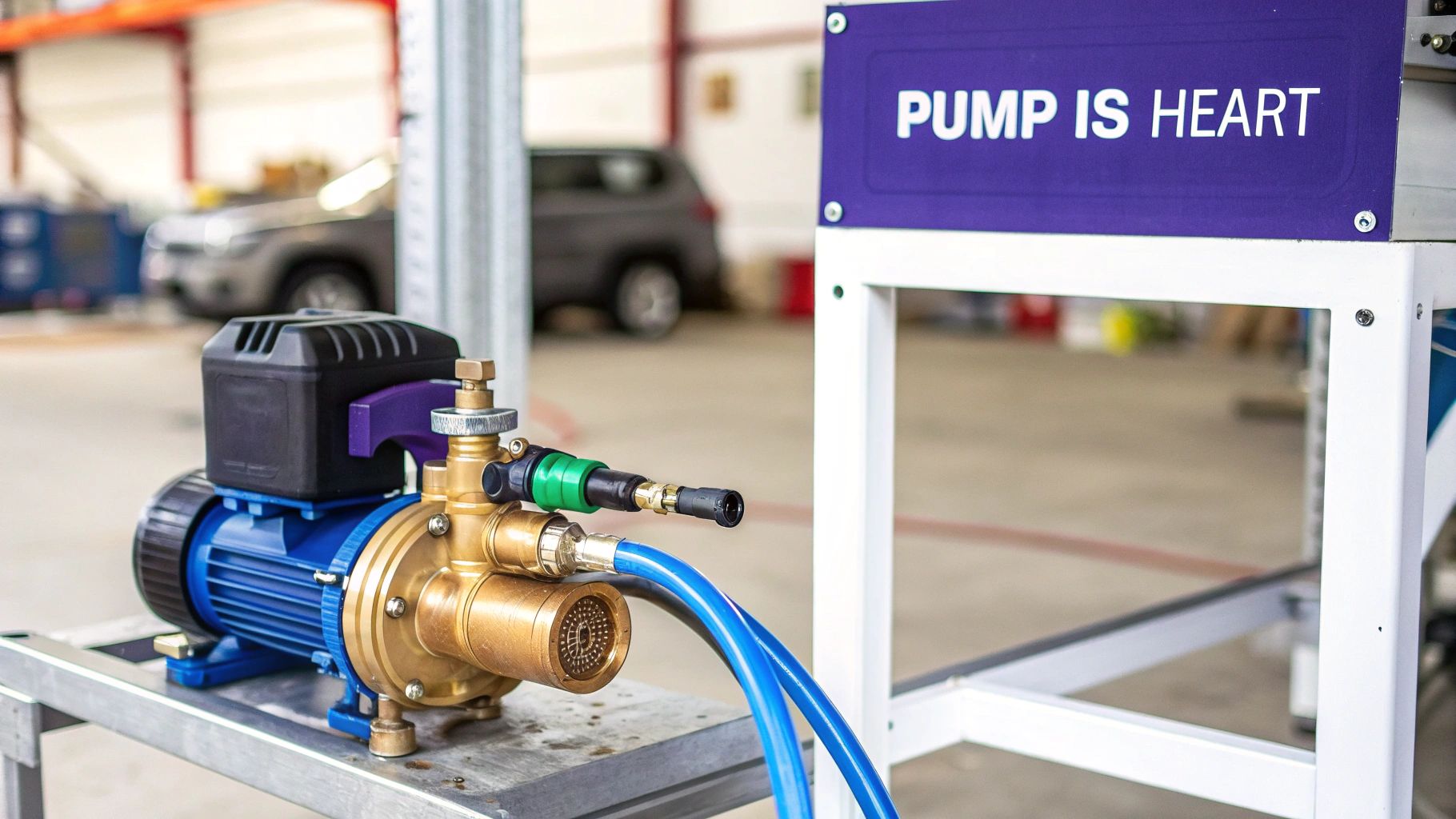
It’s easy to overlook the pump, but it’s a finely tuned system of pistons, valves, and seals all firing in perfect sequence. When one part fails, the whole machine is dead in the water. Literally.
This guide isn't about generic advice you've already heard. We’re digging into real, actionable steps for both homeowners and pros to keep that pump humming. Think of it less as a chore and more as an investment in your equipment's reliability.
Understanding the Growing Need for Maintenance
Pressure washers are more popular than ever. The global market was valued at USD 3.07 billion in 2023 and is projected to climb to USD 3.96 billion by 2029. More machines out there means more people are learning the hard way what happens when maintenance is skipped.
Here’s a perfect example: a simple oil change every 50 hours can drastically cut down on internal wear. Pumps that are neglected can degrade up to 40% faster than ones that are properly maintained. You can read the full research on pressure washer market trends and their impact to see the data for yourself.
Key Takeaway: A well-maintained pump doesn't just work better; it saves you a ton of cash on premature replacements and ensures your machine is ready to go the moment you need it.
For our local customers, we know that reliable equipment is everything. That’s why we offer expert pressure washer pump maintenance and repair services for communities across the Central Coast. Our service areas include:
San Luis Obispo
Paso Robles
Atascadero
Arroyo Grande
Pismo Beach
Morro Bay
And surrounding areas.
Whether you're a contractor hustling in Paso Robles or a homeowner tackling a weekend project in Pismo Beach, our team has the parts and the know-how to keep you up and running. This guide will walk you through everything you need to know to handle the routine stuff yourself.
Developing Your Routine Inspection Checklist
Good pressure washer pump maintenance isn't about complicated, time-consuming repairs. It's really about consistency and catching problems before they spiral out of control. A quick, simple inspection before you fire it up each time can be the difference between a minor fix and a catastrophic failure.
Think of it as a quick pre-flight check. You’re just using your eyes, ears, and hands to make sure everything is good to go. This whole process takes maybe a minute, but it's the best way I know to keep your machine reliable and avoid costly surprises on the job.
First things first, just give the pump a quick look-over. You’re scanning for anything that looks off—drips, cracks, or loose fittings. This five-second check is your first and best line of defense. A tiny drip might not seem like a big deal, but it could be a failing seal. If you ignore it, you’re risking water getting into the oil, and that will absolutely wreck the pump's internals.
What to Look For
When you're doing that visual scan, there are three key areas to zero in on: the oil, the hoses, and the filters. In my experience, these are where most pump problems start.
Pump Oil Condition: Take a peek at the sight glass on your pump. Good, healthy oil should be clear or have a nice honey color. If it looks milky or cloudy, that's the classic sign that water has found its way in, usually through a bad seal. If the oil is dark and gritty, it’s way past its prime and isn't lubricating anything properly. Time for a change.
Hose Integrity: Run your eyes—and even your hands—along your high-pressure hose. You're looking for any bulges, cracks, or spots where the wire braid is showing through. A damaged hose isn't just a performance killer; it's a massive safety hazard. For a deeper dive, check out our guide on what you need to know about high-pressure hoses.
Inlet Filter Cleanliness: That little screen on your water inlet is more important than you think. If it gets clogged with debris, it chokes the water flow. This starves the pump, forcing it to work way harder and risk overheating. Always make sure it's clear before you hook up your garden hose.
Pro Tip: After a job, especially around San Luis Obispo where we deal with a lot of hard water, it's a good habit to give that inlet filter a quick rinse. A few seconds of prevention can save your pump from a lot of premature wear caused by mineral buildup.
What to Listen and Feel For
Your ears and hands are surprisingly good diagnostic tools. A happy pump runs with a smooth, steady rhythm. You'll get used to how your machine sounds. Listen for anything different—rattling, grinding, or a new vibration. Those are often the first signs of loose parts or internal wear.
Once it's up and running, carefully place a hand on the pump casing. It'll get warm, that's normal. But if it feels excessively hot to the touch, that's a red flag for low oil or some kind of blockage. Catching these little sensory cues turns you from someone who just uses a machine into someone who really owns and understands it. It’s what keeps you working, whether you're in Paso Robles or Arroyo Grande, instead of sitting on the sidelines with a busted pump.
A Practical Guide to Changing Pump Oil and Seals
If you want to get the most life out of your pressure washer, changing the pump oil and seals is non-negotiable. These two jobs are your first line of defense, directly protecting the pump's guts from friction and water getting where it shouldn't.
Think of it as a small investment of your time that pays off big time in reliability and avoiding costly repairs down the road. A lot of people get intimidated by this stuff, but honestly, it’s pretty straightforward. With a few common tools and the right steps, you can handle this maintenance yourself.
Before you even pick up a wrench, get in the habit of doing a quick sensory check.

Simply using your eyes, ears, and hands to spot anything unusual is a powerful way to catch problems early. This simple habit goes hand-in-hand with routine fluid changes.
Handling Your Pump Oil Change
Changing the pump oil is probably the first real maintenance task most pressure washer owners tackle. The goal is simple: drain the old, worn-out oil and fill it back up with fresh oil to the exact right level. Be careful here—overfilling is a classic mistake that can blow your new seals right out.
You'll need a drain pan, the right wrench for the drain plug, and the correct oil. This part is critical: always use non-detergent pump oil recommended by the manufacturer. Never, ever use regular motor oil. The detergents in it will foam up inside the pump and eat away at the seals.
The process is simple:
Run the washer for a minute or so. This warms up the oil and helps it flow out more easily.
Slide your drain pan underneath and carefully remove the drain plug. Let every last drop of the old stuff drain out.
Once it’s empty, put the drain plug back in and snug it down.
Refill with fresh pump oil, keeping a close eye on the sight glass or dipstick. Stop right at the "full" line.
This isn’t just a homeowner task. With North America making up 43% of the global pressure washer market, proper maintenance is a huge deal for both pros and weekend warriors. Electric washers might account for 54% of sales now, but their pumps are just as susceptible to damage from bad seals. Staying on top of pump care can slash repair costs by up to 30% and improve efficiency by over 20%. You can learn more about pressure washer market and its maintenance trends to see why this matters.
Recognizing and Replacing Worn Seals
The seals in your pump are the only thing stopping high-pressure water from getting into the crankcase. When they fail, water blasts past them and mixes with your oil, creating a nasty, milky-gray sludge. This goo has zero lubricating properties and will absolutely shred your bearings and pistons in no time.
Key Insight: Milky oil is the biggest red flag you can get. If you see that creamy gray color in your pump's sight glass, shut the machine down immediately. Pushing your luck and continuing to run it is a surefire way to cause catastrophic pump failure.
Replacing seals is a bit more involved than an oil change because you have to do some disassembly, but it's totally manageable. The trick is to be methodical. Lay out your parts in the order you remove them so you know exactly how everything goes back together.
For a more in-depth guide, our DIY guide on how to repair a pressure washer has some great tips that can walk you through the process.
And if you’re working on equipment anywhere from San Luis Obispo and Paso Robles to Atascadero, our shop has the seal kits you need. We help contractors and homeowners from Arroyo Grande to Morro Bay and the surrounding communities keep their machines in fighting shape.
Winterizing Your Pump to Prevent Costly Damage
Ignoring your pressure washer when winter rolls in is probably one of the most expensive mistakes you can make with this equipment. As soon as the temperature dips below freezing, any water trapped inside the pump will expand, and that expansion exerts a massive amount of force on the internal components.
This isn't just a small problem. That force causes irreversible damage—cracking the pump manifold, shattering valves, and destroying delicate seals. The only fix for a freeze-damaged pump is a full replacement, a frustrating and pricey ordeal that is completely avoidable.
Proper winterization is a non-negotiable part of pressure washer pump maintenance, especially for those of us here on the Central Coast who get those colder nights and mornings. A few minutes of prep work now will save you hundreds of dollars later.
The Winterization Process Explained
The main goal here is simple: get all the water out of the system and replace it with a protective fluid. This ensures there’s nothing left inside that can freeze, expand, and break your machine.
First, disconnect all the hoses from your pressure washer. If you have a gas model, give the starter rope a few gentle pulls to push any lingering water out of the pump. This one simple move purges most of the moisture before you even think about adding a protectant.
Next, it's time to introduce a dedicated pump saver or antifreeze solution. These products are made specifically to lubricate the seals and prevent corrosion while your machine is in storage.
Connect the Solution: Most pump savers are sold in a bottle with a threaded top that screws right onto your pressure washer's water inlet.
Run It Through: Fire up the machine for just a few seconds. You're watching for the protective fluid to start coming out of the pump's high-pressure outlet. Once you see it, you're done. The pump is now fully protected.
Store It Right: Find a dry place where the temperature stays consistent, like a garage or shed. Try to avoid leaving it outside where it’s exposed to moisture and big temperature swings.
If you're a contractor in San Luis Obispo or the surrounding areas, this step is absolutely critical for protecting your investment. Winter downtime is the perfect time for thorough maintenance, not for discovering a cracked pump that will delay you when spring work picks up.
For professionals and homeowners in San Luis Obispo, Paso Robles, Atascadero, Arroyo Grande, Pismo Beach, Morro Bay, and the surrounding areas, we understand the local climate. If you're not sure about the process or would rather have an expert handle it, our team at Contractor's Maintenance Service offers complete winterization services to make sure your equipment is protected and ready for next season.
How to Troubleshoot Common Pump Problems
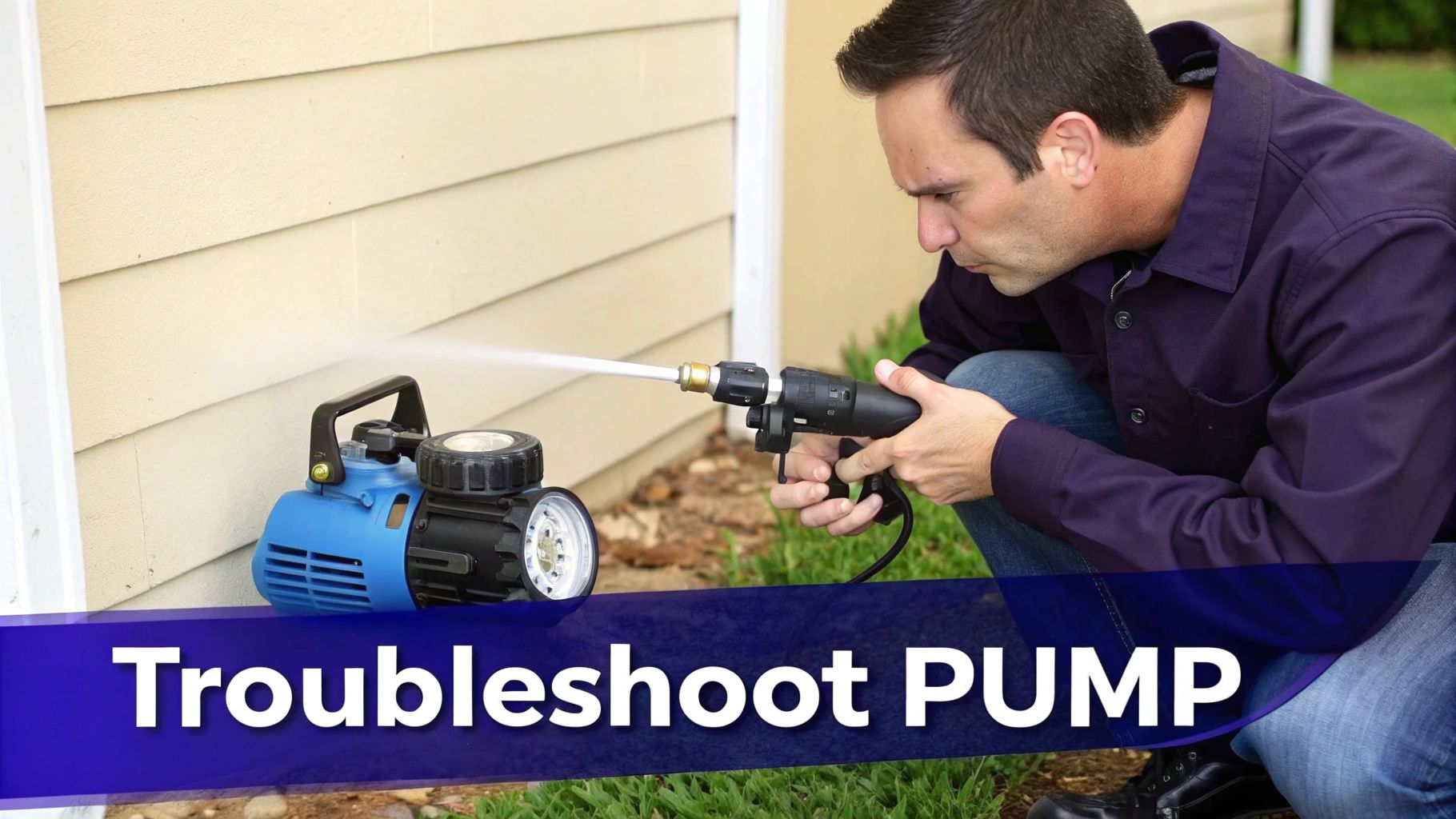
Sooner or later, even the best-maintained pressure washer pump is going to give you some grief. The trick is knowing how to read the signs so you can figure out what's wrong and get back to work without making things worse.
Most pump issues show up in just a handful of ways. When your machine starts acting up, don't jump straight to the worst-case scenario. Instead, put on your detective hat. If you can connect the symptom to the likely cause, you can often fix the problem in minutes with a simple tweak or a quick clean-out. It'll save you a ton of time and keep you from assuming you need an expensive repair.
Diagnosing Weak or No Pressure
A sudden drop in pressure is probably the number one complaint we hear. Before you even think about taking the pump apart, check the simple stuff first. Is the water spigot turned on all the way? Is the inlet filter clogged with sand or grass? You'd be surprised how often that’s the entire problem.
If the basics check out, here are the next likely suspects:
Worn-out Nozzle: Over time, the hole in your spray nozzle gets wider, causing a pretty obvious pressure drop. Pop on a new nozzle and see if that brings the power back.
Faulty Unloader Valve: This is the part that regulates pressure by bypassing water when you're not spraying. If it gets stuck or starts to fail, it can stop the pump from building pressure like it should.
Damaged Seals or Valves: Internal wear and tear is just a fact of life for these machines. If you’ve ruled out everything else, chances are the internal seals or check valves have worn down and are causing the pressure loss.
A well-cared-for pump can give you over 3,000 hours of solid work, but a neglected one might tap out in just 1,000 to 1,500 hours. Catching these symptoms early is the key to getting your money's worth out of your equipment.
Solving Pulsating or Surging Issues
Is your pressure washer's stream sputtering and surging? That almost always points to an issue with water flow into the pump. The pump is basically starving for water, which is what causes that unsteady, pulsating output.
Start by looking for a clogged inlet filter or any kinks in your garden hose. Any restriction on the supply side will cause this exact problem. Air getting into the system is another common culprit, so make sure every hose connection is snug and that the little O-rings inside the fittings are in good shape.
If it's still pulsing after that, the unloader valve could be the problem again, cycling on and off when it shouldn't be. For a more detailed breakdown, take a look at our guide on troubleshooting pressure washer problems for quick fixes.
Addressing Water or Oil Leaks
Leaks are your pump’s way of screaming for help. If you see oil, it's usually a failing oil seal or, in worse cases, a cracked pump casing. A water leak typically means a worn piston seal or a fitting that's worked its way loose.
Whatever you do, don't just ignore it. A small drip today can turn into a catastrophic failure tomorrow.
For our customers in San Luis Obispo, Paso Robles, Atascadero, and the surrounding areas, figuring out where the leak is coming from is the first step. If the fix looks like it's more involved than tightening a fitting or replacing a simple seal, it’s probably time to let a pro handle it. Our team services equipment from all over the Central Coast, including Arroyo Grande, Pismo Beach, and Morro Bay, so we can get you back up and running with a solid repair.
Knowing When to Call a Pro
Even the most dedicated DIYer has limits. While handling routine maintenance on your pressure washer pump is a great way to save money and keep your machine in top shape, some problems are just too complex or risky to tackle on your own. Pushing ahead with a repair you're not equipped for can quickly turn a small problem into a catastrophic—and expensive—failure.
Knowing when to put the tools down and pick up the phone is a skill in itself. It's one thing to handle an oil change or clean a filter, but certain symptoms point to deeper, more serious internal damage that requires a technician's specialized tools and years of experience.
Red Flags That Mean It's Time for a Professional
If you run into any of these issues, your best move is to call for backup. Trying to fix these problems without the right training can easily lead to more damage or create a serious safety hazard.
A Cracked Pump Manifold: This is a big one. It's usually caused by freeze damage (water expanding inside the pump) or a massive pressure spike. A cracked manifold is a major failure, and it almost always means you're looking at a full pump rebuild or a complete replacement. This isn't a simple part swap; it's a job for a pro.
Persistent Pressure Loss: So, you've already gone through the usual suspects—checked your nozzles for clogs, inspected the hoses for leaks, and cleaned the inlet filters—but your pressure is still weak. At this point, the problem is likely internal. Worn-out plungers, bad valves, or a failing unloader valve all require a precise teardown and reassembly that's best left to someone who does it every day.
Severe Oil Contamination: Seeing milky oil in the pump is a classic sign of bad water seals, which is a manageable DIY job for many. But what if you replace the fluid and seals, and the oil turns milky again almost immediately? That’s a bad sign. It often points to a warped or scored component that's causing the new seals to fail right away. A pro can diagnose the underlying cause.
When you find yourself in over your head, the smartest and often cheapest move is to trust an expert. A professional diagnosis gets to the root cause, saving you from throwing money at parts that only treat the symptom.
Your Local Central Coast Experts
For those of you in our neck of the woods, you don't have to go it alone. We offer trusted, professional pressure washer repair and maintenance for homes and businesses all over San Luis Obispo county and the surrounding areas. Our team is here and ready to help you get your machine running right.
We're proud to be the local experts serving communities like:
San Luis Obispo
Paso Robles
Atascadero
Arroyo Grande
Pismo Beach
Morro Bay
Frequently Asked Questions About Pump Maintenance
Let's tackle some of the most common questions we get about pressure washer pump maintenance. Getting these basics right can save you a lot of headaches down the road.
How Often Should I Really Change My Pump Oil?
For most homeowners, changing the pump oil once a season or every 50 hours of use is a good, safe bet. It keeps everything running smoothly without being overkill.
But if you're putting your machine through its paces commercially—say, on construction sites in Paso Robles or for agricultural work out in Atascadero—you need to be more vigilant. In those tough, dusty environments, I'd recommend changing it every 25-40 hours. It's a small task that makes a huge difference in how long your pump will last.
Can I Use Regular Motor Oil in My Pump?
Please don't. It's a common mistake, but it can cause real damage. Your pressure washer pump is designed for a specific non-detergent pump oil.
Motor oil has detergents that will foam up inside the pump, and that's bad news for your seals and valves. It's an easy way to ruin a perfectly good pump. Always stick with what the owner's manual says to ensure you're getting the right lubrication.
What Is the Most Common Cause of Pump Failure?
Hands down, the number one killer of pressure washer pumps is overheating. This almost always happens when someone leaves the machine running in bypass mode (not pulling the trigger) for too long. The water just recirculates and heats up, quickly cooking the internal seals and components from the inside out.
The single most common cause of pump failure is overheating, often from leaving the machine running for too long without spraying water (running in bypass). This traps heat and quickly damages internal seals and components. The second leading cause is damage from freezing water left in the pump during winter.
The second most common cause of catastrophic failure? Freeze damage. If you leave water in the pump during winter storage, it will expand when it freezes and crack the manifold. It's a completely avoidable problem, but we see it all the time.
If you run into more complex issues or just want a hand with your pressure washer pump maintenance, our team is here to help. We offer expert service for clients all over San Luis Obispo county, from Paso Robles and Atascadero to Arroyo Grande, Pismo Beach, Morro Bay, and the surrounding communities.
When you need professional-grade parts, service, or just some solid advice, trust the team at Contractor's Maintenance Service. Visit our website or swing by our San Luis Obispo shop to find everything you need to keep your equipment in top shape. https://www.contractorsmaintenanceservice.com
Comments