


The Ultimate Heavy Equipment Maintenance Checklist: 8 Critical Steps For 2026
In the fast-paced world of construction, painting, and industrial services, equipment downtime isn't just an inconvenience; it's a direct hit to your bottom line. A single stalled compactor, a malfunctioning Graco sprayer, or a failed hydraulic system can derail project timelines, inflate costs, and damage your professional reputation. That's why a proactive, systematic approach to upkeep is non-negotiable. This isn't just another generic list; it's a comprehensive heavy equipment maintenance checklist designed for contractors who demand peak performance and longevity from their machinery.
We'll break down the most critical inspection points, from daily fluid checks to annual fastener assessments, that prevent catastrophic failures and keep your operations running smoothly. These preventative measures are crucial for extending the life of your assets and avoiding costly emergency repairs. To ensure peak performance and minimize downtime, contractors often weigh their options for sourcing quality aftermarket heavy equipment parts that meet demanding operational needs. Understanding what to look for and when to replace components is key to a successful maintenance strategy.
For contractors in San Luis Obispo, Paso Robles, Atascadero, Arroyo Grande, Grover Beach, Pismo Beach, Nipomo, Morro Bay, and the surrounding Central Coast areas, this guide provides actionable steps to maximize your investment and ensure you're always ready for the next job. By following these structured checks, you can transform your maintenance routine from a reactive chore into a powerful tool for operational excellence and profitability. This detailed checklist will help you identify issues before they become critical, ensuring your fleet remains a reliable source of revenue, not a source of unexpected expenses.
1. Engine Oil and Fluid Level Inspection
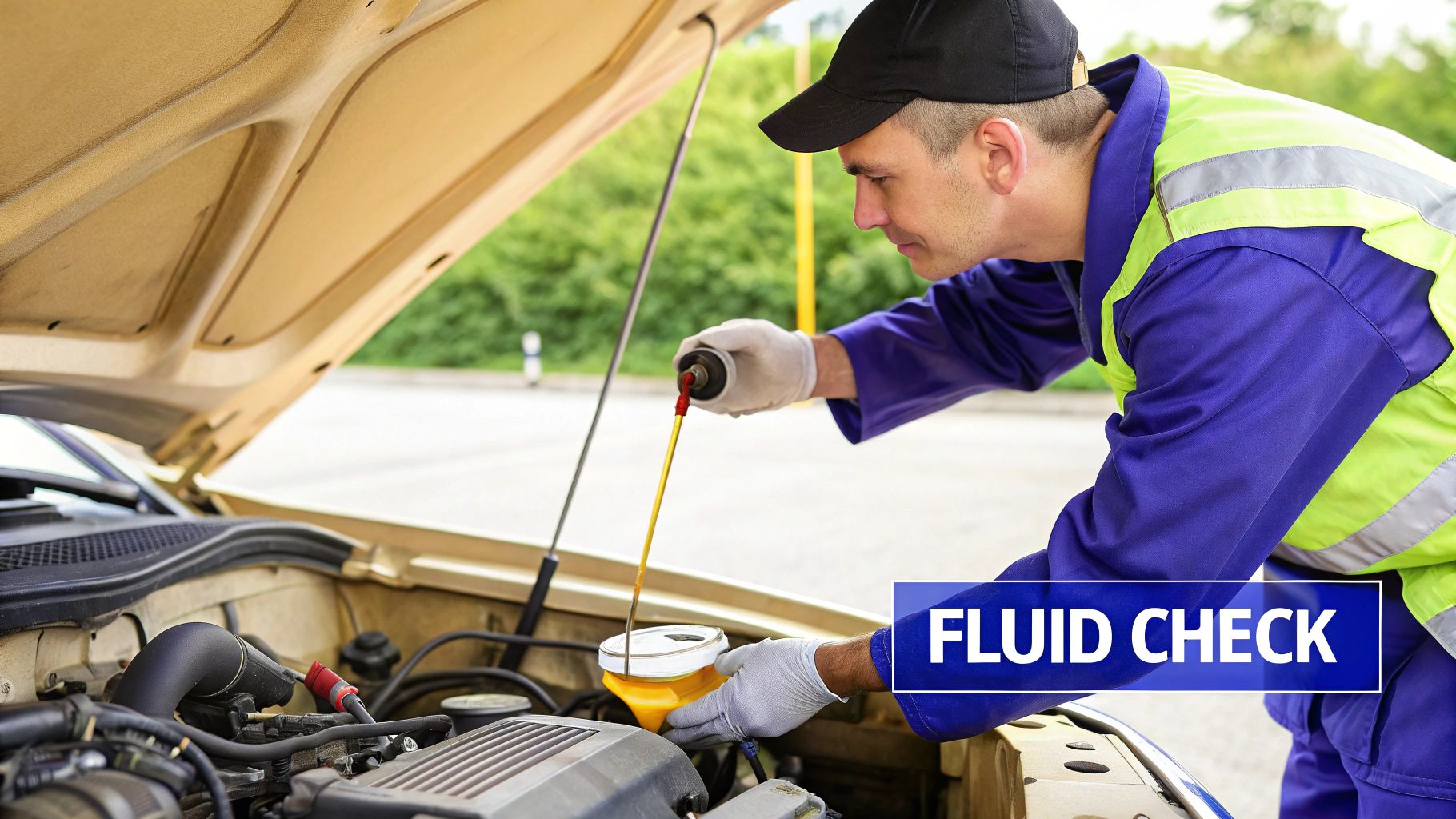
The absolute foundation of any effective heavy equipment maintenance checklist is the diligent, daily inspection of all critical fluids. Just as water is essential for life, the proper fluids are the lifeblood of your machinery. This check goes beyond simply glancing at a dipstick; it involves a comprehensive assessment of engine oil, hydraulic fluid, coolant, and transmission fluid to ensure they are at the correct levels, in good condition, and free from contamination. Neglecting this simple, five-minute task can lead to catastrophic failures, including engine seizure, hydraulic system collapse, and severe overheating.
Why It's a Top Priority
Proper fluid management directly prevents the most common and costly equipment failures. For construction contractors, discovering low hydraulic fluid on a mini-excavator during a morning check prevents a mid-dig breakdown that could derail an entire project schedule. Similarly, commercial painters who rely on Graco sprayers find that daily fluid checks are key to extending the service life of their pumps, often by three years or more. This proactive approach ensures consistent performance and maximizes your return on investment.
Real-World Impact: A municipal public works department in San Luis Obispo County reduced its compactor and loader downtime by over 40% simply by implementing and enforcing a strict daily fluid inspection protocol for every operator at the start of their shift.
How to Implement Fluid Checks Effectively
Integrating fluid inspections into your daily routine is crucial for success. The goal is to make it an automatic, non-negotiable step before any machine is started.
Create a Routine: Make pre-operation fluid checks the first step of every operator's morning startup procedure.
Log Everything: Keep detailed fluid logs for each piece of equipment. This helps identify slow leaks or abnormal consumption patterns that signal a developing problem.
Train Your Team: Ensure every operator, from San Luis Obispo to Paso Robles, is trained on the proper procedures for checking fluids on their specific machine, including how to read dipsticks and sight glasses correctly.
Track by Hours: Schedule fluid changes based on the manufacturer's recommended operating hours, not just calendar dates, for a more accurate maintenance schedule.
By making this item number one on your heavy equipment maintenance checklist, you establish a culture of prevention that saves time, money, and protects your most valuable assets.
2. Filter Replacement and Air Quality Assessment
Following fluid inspection, the next critical item on any heavy equipment maintenance checklist is a rigorous assessment of all filtration systems. Your machinery’s filters, including engine air, hydraulic, fuel, and oil filters, are the primary defense against the dirt, dust, and debris common on job sites. They are designed to trap contaminants that would otherwise damage sensitive internal components. A clogged filter suffocates your equipment, forcing it to work harder, consume more fuel, and ultimately suffer from premature wear and tear.
Why It's a Top Priority
Proactive filter management is essential for maintaining equipment efficiency and preventing costly, system-wide damage. For construction contractors in dusty environments like those around San Luis Obispo, diligent air filter checks prevent engine power loss and protect turbochargers from abrasive particles. Similarly, commercial painters find that regular inspections of their air and fluid filters are crucial for achieving a flawless finish, as a clogged filter can introduce contaminants into the spray pattern. This simple maintenance step ensures peak performance and protects your investment from avoidable damage.
Real-World Impact: An industrial manufacturing facility extended the operational life of its critical air compressors by over two years by implementing a strict monthly filter inspection and replacement schedule, drastically reducing unexpected downtime and repair costs.
How to Implement Filter Checks Effectively
Making filter management a systematic part of your maintenance routine is key to equipment longevity. The goal is to move from a reactive "fix-it-when-it-breaks" model to a proactive, preventative strategy.
Create a Schedule: Develop a color-coded filter replacement chart for different equipment types, with intervals adjusted for the demanding conditions found from Paso Robles to the coast.
Stock Common Filters: Keep a ready supply of frequently used filters on-site. This simple step, easily managed by a provider like Contractor's Maintenance Service, eliminates delays and keeps your projects on schedule. For a deeper understanding of filtration, you can explore specialized guides on the subject. Learn more about the importance of micron filters here.
Train for Recognition: Teach operators to identify early signs of a clogged filter, such as reduced power, darker exhaust smoke, or unusual engine noises.
Log Every Change: Document filter replacement dates and machine operating hours in your maintenance log. This data is invaluable for tracking trends, honoring warranty requirements, and optimizing your service intervals.
By prioritizing filter health on your heavy equipment maintenance checklist, you ensure your machinery breathes clean air and runs on clean fluids, directly contributing to its power, efficiency, and long-term reliability.
3. Hose and Coupling Inspection for Leaks and Integrity
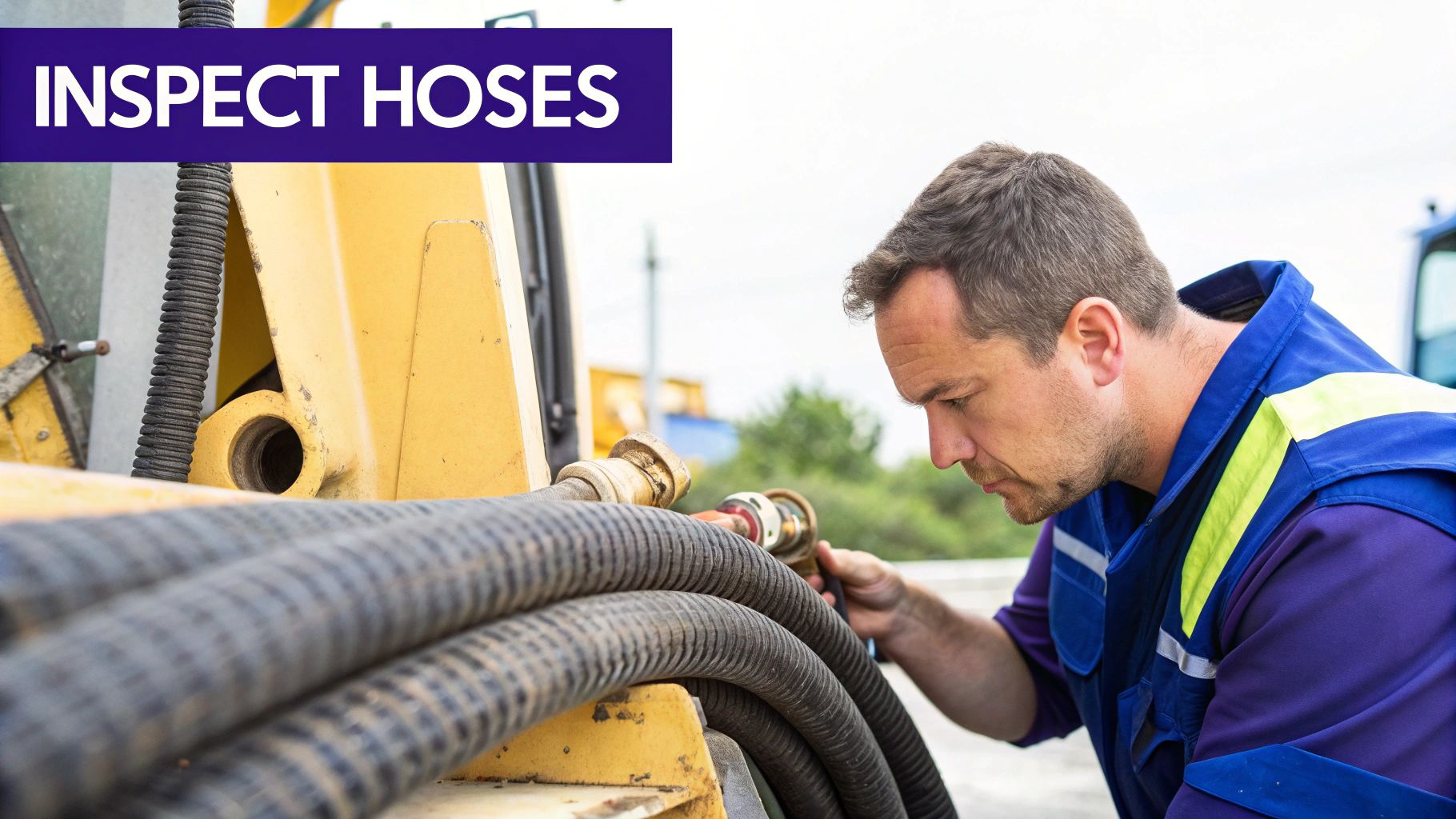
If fluids are the lifeblood of heavy equipment, then hydraulic hoses and couplings are the critical arteries and veins. This essential checkpoint on any heavy equipment maintenance checklist involves a detailed visual inspection of all hoses for cracks, bulges, abrasions, and leaks. It also includes verifying the integrity of couplings to ensure they are secure and not compromised. A sudden hose failure can lead to catastrophic loss of hydraulic pressure, causing immediate equipment stoppage, significant fluid spills, and severe safety hazards for operators and nearby personnel.
Why It's a Top Priority
Proactive hose and coupling inspection directly prevents high-pressure fluid injection injuries, a serious risk governed by OSHA hydraulic safety standards. For commercial painters using Graco sprayers, identifying a degraded pressure washer hose before it bursts prevents costly project delays and material waste. Likewise, construction contractors in San Luis Obispo and surrounding areas rely on intact hydraulic lines for the safe operation of excavators and loaders. A single failed hose can halt a job site, requiring immediate and often specialized repairs.
Real-World Impact: An industrial maintenance manager in Paso Robles prevented over $50,000 in potential equipment damage and environmental cleanup costs by implementing a monthly hose inspection program that identified a critically worn hydraulic hose on a primary production machine before it failed under load.
How to Implement Hose Checks Effectively
Making hose inspection a routine, documented part of your maintenance schedule is key to ensuring operational reliability and safety. The goal is to catch degradation before it leads to failure.
Schedule Routine Inspections: Establish a mandatory monthly hose inspection for all equipment, supplementing daily visual checks by operators.
Check Routing: Ensure hoses are routed away from sharp edges, pinch points, and hot surfaces to prevent abrasion and heat damage.
Proactive Replacement: Don't wait for visible damage. Replace hoses based on age (typically 5-7 years, per manufacturer guidelines) to prevent failures from internal degradation.
Partner for Custom Needs: For unique or hard-to-find assemblies, partner with a specialist. Our team at Contractor's Maintenance Service offers custom hydraulic hose fabrication to solve equipment fit and availability issues across the Central Coast. You can learn more about our hose safety and fabrication services here.
4. Battery Health and Electrical System Verification
A piece of heavy equipment that won't start is nothing more than an expensive obstacle. That's why a thorough battery and electrical system check is an indispensable part of any heavy equipment maintenance checklist. This crucial step involves more than just ensuring the engine turns over; it’s a comprehensive review of battery voltage, terminal connections, charging system output, and cable integrity. Ignoring the electrical system can lead to unexpected no-starts, stranding machinery on-site and bringing productivity to a grinding halt.
Why It's a Top Priority
A reliable electrical system is the nerve center of modern machinery, powering everything from ignition to sophisticated onboard diagnostics. For a construction rental yard, implementing a rigorous battery testing protocol on all outgoing equipment can dramatically reduce frustrating customer service calls about non-starting machines. Similarly, commercial painting contractors who rely on portable generators and air compressors find that seasonal battery checks prevent costly startup failures in the middle of a time-sensitive project, ensuring they can power their equipment when needed most.
Real-World Impact: An equipment rental company in Arroyo Grande reduced customer complaints related to non-starting equipment by over 40% after introducing a mandatory pre-rental battery and alternator check for every machine.
How to Implement Electrical System Checks Effectively
Making electrical system verification a scheduled, proactive task is the key to preventing unexpected downtime. The goal is to identify and address weakening components before they fail completely.
Schedule Quarterly Inspections: Perform a detailed battery and charging system check at least once per quarter, paying special attention before extreme seasonal temperature shifts.
Keep Terminals Clean: Regularly clean battery terminals to remove corrosion, which can inhibit current flow and prevent a strong start.
Log Voltage Readings: Track battery voltage over time. A gradual decline is a clear indicator that a battery is nearing the end of its service life and should be replaced proactively.
Proactive Replacement: Don't wait for a battery to fail. Plan to replace batteries every 3-5 years, regardless of their apparent condition, to avoid unexpected issues. This is a critical practice for operators from Paso Robles to Santa Maria.
Test the Alternator: Use a multimeter to test the charging system's output. This helps distinguish between a failing battery and a faulty alternator, ensuring you fix the right problem the first time.
By integrating these electrical system verifications into your maintenance routine, you ensure your equipment is always ready to work, protecting your schedule and your bottom line.
5. Spark Plug and Ignition System Inspection
For gasoline-powered heavy equipment like generators, compressors, and power tools, the ignition system is the heart of reliable performance. This crucial check on your heavy equipment maintenance checklist focuses on the spark plugs, the small but mighty components responsible for igniting the fuel-air mixture. A thorough inspection involves checking for wear, corrosion, and fouling on the plug's electrodes, verifying the correct spark gap, and replacing them at manufacturer-recommended intervals. Ignoring this task leads to hard starts, rough idling, poor fuel efficiency, and a significant drop in power.
Why It's a Top Priority
A healthy ignition system ensures your engine starts quickly and runs smoothly, delivering the power you depend on. For commercial painting contractors in areas like Paso Robles, this means their Graco sprayers and Honda generators fire up reliably every time, preventing costly delays on a job site. Construction equipment rental facilities that implement pre-rental spark plug inspections dramatically reduce customer complaints about poor-performing equipment, enhancing their reputation for quality and reliability. Consistent spark plug service is a low-cost, high-impact way to maintain peak engine performance and extend equipment life.
Real-World Impact: A local landscaping contractor in Arroyo Grande was experiencing frequent starting issues with their high-powered leaf blowers and portable generators. By implementing a simple quarterly spark plug replacement schedule, they eliminated over 90% of their ignition-related failures and improved fuel efficiency by nearly 15%.
How to Implement Ignition Checks Effectively
Making spark plug inspection a routine part of your maintenance schedule for gasoline-powered tools is essential for consistent operation. The goal is to catch wear and fouling before they degrade performance.
Stock Common Plugs: Keep an inventory of the specific spark plug types needed for your equipment fleet to avoid downtime.
Use the Right Tools: Always use a proper spark plug socket and a gap tool to prevent damage during removal and ensure precise installation.
Log Replacements: Track spark plug service by operating hours in your maintenance logs. Most manufacturers recommend replacement every 100-200 hours.
Read the Plugs: Train your team, from San Luis Obispo to Santa Maria, to inspect the color of old plugs. A black, sooty plug can indicate a rich fuel mix, while a white, chalky appearance suggests a lean condition, pointing to other potential engine issues.
By systematically addressing the ignition system, you ensure your gasoline-powered equipment remains a reliable asset rather than a recurring problem.
6. Bearing and Lubrication Point Inspection
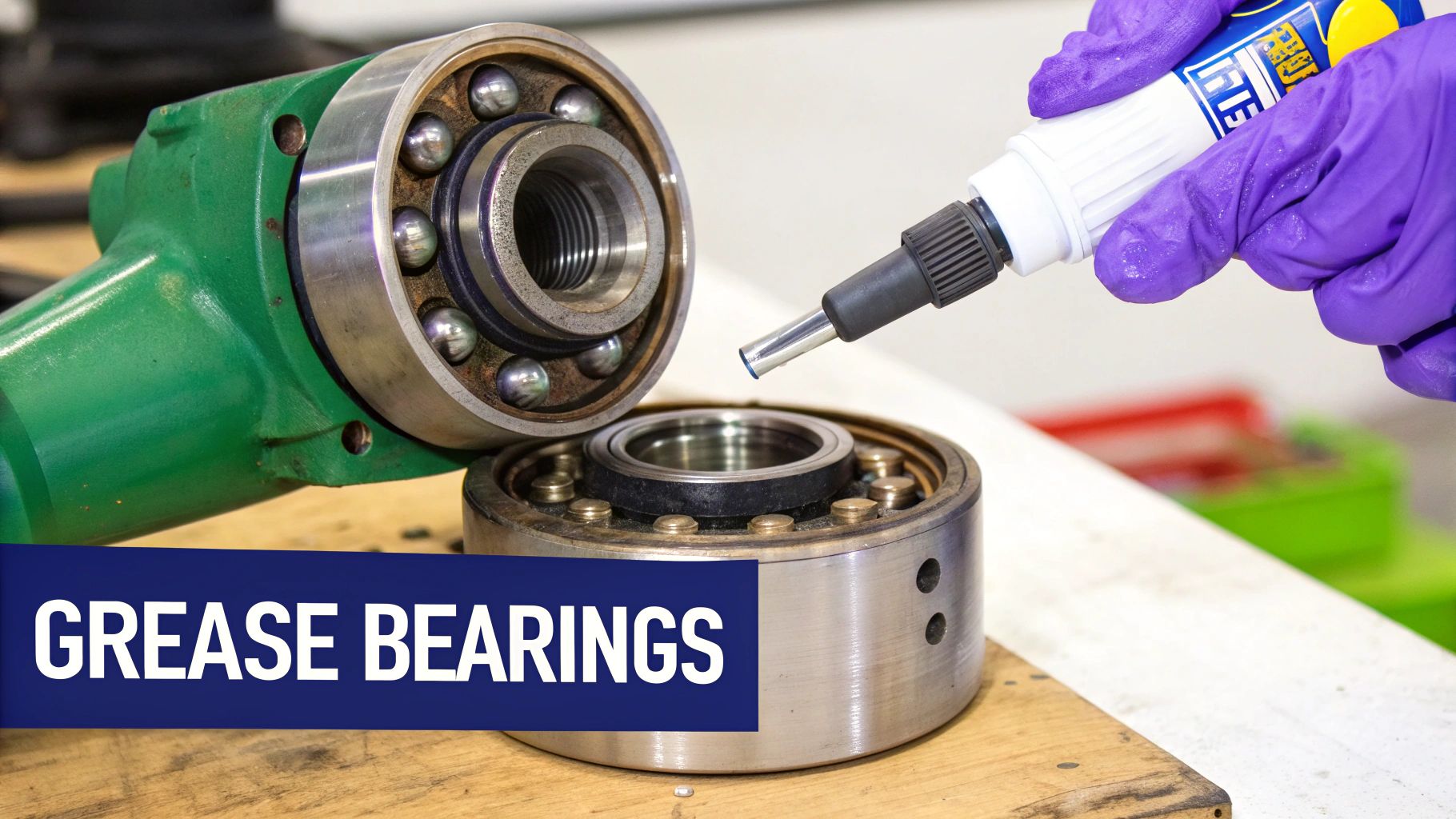
Every piece of heavy equipment is a complex assembly of rotating and pivoting components, from bearings and bushings to hinges and linkages. Proper lubrication is the single most critical factor preventing friction, heat buildup, and premature wear in these moving parts. This essential checkpoint on any heavy equipment maintenance checklist involves systematically identifying all lubrication points, applying the correct type and amount of grease, and documenting the service. Ignoring this step is a direct path to seized components, costly replacements, and catastrophic equipment failure.
Why It's a Top Priority
Systematic lubrication is one of the most cost-effective investments you can make in equipment longevity and reliability. For industrial facilities managers, routine bearing lubrication on air compressors and hydraulic pumps prevents the kind of sudden failure that can shut down an entire production line. Likewise, painting contractors find that the monthly application of grease to their paint sprayers, as recommended by manufacturers, can extend the life of the equipment by five years or more. This simple, preventative action ensures smooth operation and protects your assets.
Real-World Impact: An equipment rental facility on the Central Coast reduced bearing-related failures on its skid steers and mini-excavators by over 60% by implementing a mandatory, multi-point lubrication check before every rental.
How to Implement Lubrication Checks Effectively
Making lubrication a consistent and documented part of your maintenance schedule transforms it from a chore into a powerful asset-protection strategy.
Create Laminated Charts: For each piece of equipment, create and attach a laminated chart that visually identifies all grease points (zerks), specifies the type of lubricant, and notes the service interval.
Use Color-Coding: Apply color-coded caps or markers to grease fittings to quickly identify different grease types or service frequencies (e.g., red for weekly, yellow for monthly).
Document and Monitor: Log every lubrication service, noting the date, hour meter reading, and any observations like unusual bearing noise or heat, which can be checked with an infrared thermometer.
Train Your Operators: Ensure every team member, from Paso Robles to Santa Maria, is trained on proper greasing techniques. Using the right tools is key; you can learn more about choosing and using a cordless grease gun to improve efficiency and accuracy.
Adjust for Conditions: Increase lubrication frequency for equipment operating in extremely dusty, wet, or high-temperature environments common in San Luis Obispo County.
By making diligent lubrication a core part of your heavy equipment maintenance checklist, you actively prevent wear and tear, significantly extending the operational life of your machinery.
7. Pressure Testing and Seal Integrity Verification
For equipment powered by hydraulic, pneumatic, or fluid pressure systems, maintaining operational pressure is non-negotiable for both performance and safety. This essential checkpoint on your heavy equipment maintenance checklist involves the systematic verification of system pressures using calibrated gauges. It's a comprehensive process that includes testing pressure relief valves, meticulously inspecting all seals and gaskets for leaks, and confirming the system's ability to hold pressure under operational loads. A loss of pressure is a critical symptom of underlying issues like worn seals, internal leaks, damaged hoses, or malfunctioning valves.
Why It's a Top Priority
Consistent pressure is the bedrock of predictable and safe equipment operation. For commercial painters using Graco or Wagner sprayers, a pre-job pressure test can identify a drop that would otherwise cause inconsistent atomization and ruin a high-quality finish, preventing costly rework. Similarly, for operators of hydraulic tools and pressure washers, this check is a critical safety measure. A failure in a high-pressure system can lead to dangerous fluid injections or catastrophic equipment failure, making regular verification vital for OSHA compliance and worker protection.
Real-World Impact: An industrial maintenance team in Santa Maria implemented mandatory monthly relief valve function tests on their pneumatic systems. This protocol prevented two potential over-pressurization incidents within the first six months, directly protecting workers from serious injury.
How to Implement Pressure Checks Effectively
Making pressure and seal verification a routine part of your maintenance schedule turns a reactive repair process into a proactive safety and performance program. The goal is to catch deviations before they escalate into failures.
Standardize Your Tools: Maintain a kit with calibrated pressure gauges and the correct adapters for all equipment. This ensures accurate and repeatable readings.
Establish Baselines: Create and display system pressure reference charts for each machine. Documenting baseline readings during a new machine's initial service provides a crucial benchmark for future trend analysis.
Test Under Load: A comprehensive assessment includes checking pressure under both no-load and full-load conditions to reveal issues that only appear during operation.
Systematic Troubleshooting: When a pressure drop is detected, train your team to use systematic isolation testing on hoses and couplings to pinpoint the source of the leak efficiently. Technicians from Paso Robles to Arroyo Grande rely on this method to speed up diagnostics.
By incorporating rigorous pressure testing into your heavy equipment maintenance checklist, you ensure your machinery operates not only effectively but also safely, safeguarding both your projects and your personnel.
8. Fastener Tightness and Structural Integrity Assessment
Heavy equipment operates under immense stress, where constant vibration and heavy loads conspire to loosen critical connections. This makes a systematic assessment of fastener tightness and overall structural integrity an indispensable part of any heavy equipment maintenance checklist. This crucial step involves more than just a visual scan; it requires physically checking bolts, nuts, and other fasteners with a torque wrench, inspecting welds for stress fractures, and ensuring all structural components are secure. Ignoring this can lead to everything from minor leaks to catastrophic frame failures.
Why It's a Top Priority
Maintaining fastener and structural integrity is the ultimate form of preventative maintenance. For construction contractors, finding and tightening a loose engine mounting bolt during a monthly check prevents a costly breakdown that could halt a project. Similarly, equipment rental yards in areas like Paso Robles and Arroyo Grande prevent catastrophic failures and liability issues by implementing a rigorous fastener inspection before any equipment leaves their lot. This proactive measure ensures safety, enhances reliability, and preserves the operational lifespan of your assets.
Real-World Impact: An industrial maintenance manager in Santa Maria eliminated persistent vibration noise and premature wear on a large conveyor system by implementing a systematic quarterly bolt tightening schedule, saving thousands in potential component replacement costs and unscheduled downtime.
How to Implement Fastener Checks Effectively
Integrating fastener and structural inspections into your regular maintenance schedule is key to preventing failures before they happen. The goal is to create a repeatable process that ensures no critical connection is overlooked.
Create Torque Guides: Develop and post clear torque specification reference charts for each machine, making it easy for technicians to apply the correct force.
Mark Your Work: Use color-coded paint marks across tightened fastener heads and the adjoining surface. A broken paint line provides an immediate visual cue that a bolt has loosened.
Prioritize High-Vibration Zones: Focus monthly inspections on high-stress areas like engine mounts, hydraulic pumps, attachments, and rotating components.
Use the Right Parts: Always replace fasteners with the correct grade and material as specified by the manufacturer. Never substitute with a lower-grade bolt, as it can lead to failure under load.
Document Everything: Log all fastener inspections and any re-torquing actions. This creates a service history that is invaluable for diagnostics and compliance tracking for operators from San Luis Obispo to Atascadero.
8-Point Heavy Equipment Maintenance Comparison
Item | 🔄 Implementation Complexity | ⚡ Resource Requirements | ⭐ Expected Outcomes | 📊 Ideal Use Cases | 💡 Key Advantages / Tips |
|---|---|---|---|---|---|
Engine Oil and Fluid Level Inspection | Low — simple visual checks and dipstick/sight glass reading | Minimal tools; basic fluids on-site; ~5–10 min per check ⚡ | High — prevents wear, overheating; extends engine life ⭐ | Daily pre-op for generators, compactors, pumps | Establish daily checks, keep spare fluids, log readings 💡 |
Filter Replacement and Air Quality Assessment | Moderate — multiple filter types and interval tracking 🔄 | Inventory of filters, basic tools, occasional pressure-differential gauges | High — improves fuel economy and prevents contamination ⭐ | Dusty construction sites, sprayers, compressors | Stock common filters, document replacements, adjust intervals by environment 💡 |
Hose and Coupling Inspection for Leaks and Integrity | Moderate to high — visual + pressure testing for weak points 🔄 | Visual inspection tools, pressure tester, spare/custom hose assemblies | High — prevents fluid loss, safety hazards, sudden failures ⭐ | Hydraulic systems, pressure washers, paint sprayers | Monthly checks, proper routing, partner for custom fabrication; keep emergency hose kits 💡 |
Battery Health and Electrical System Verification | Low to moderate — voltage and charging tests, terminal care 🔄 | Multimeter, terminal cleaner, spare batteries/jumper cables; seasonal prep ⚡ | High — reliable starts, fewer job delays; detects charging faults ⭐ | Portable generators, compressors, mobile equipment | Quarterly testing, record voltages, replace proactively at 3–5 years 💡 |
Spark Plug and Ignition System Inspection | Low — visual electrode checks and gap verification 🔄 | Spark plug socket, gap tool, replacement plugs; quick task ⚡ | High — better starting, fuel efficiency, smoother running ⭐ | Gasoline engines: generators, compressors, power tools | Stock plugs, set gap precisely, replace per hours (100–200 h) 💡 |
Bearing and Lubrication Point Inspection | Moderate — many points and correct lubricant selection 🔄 | Grease guns, specified lubricants, lubrication charts; IR temp checks | Very high — extends component life, reduces noise and failures ⭐ | Rotating joints, pivots, compressors, construction machinery | Use lubrication charts, monitor temps, avoid over-greasing; document dates 💡 |
Pressure Testing and Seal Integrity Verification | High — calibrated gauges, safety protocols, load testing 🔄 | Calibrated pressure gauges, adapters, depressurization tools; trained staff | Very high — ensures safe high-pressure operation and spray quality ⭐ | Pressure washers, sprayers, hydraulic/pneumatic systems | Maintain calibrated gauges, test under load, always depressurize before service 💡 |
Fastener Tightness and Structural Integrity Assessment | Moderate — systematic torque checks and weld/ crack inspection 🔄 | Torque wrenches, replacement fasteners, inspection time; torque specs needed | High — prevents structural failures and misalignment ⭐ | High-vibration equipment, rental fleets, heavy machinery | Keep torque guides, mark tightened bolts, use thread-lockers where required 💡 |
Partnering for Peak Performance on the Central Coast
Navigating the complexities of heavy equipment ownership requires more than just a capital investment; it demands a strategic commitment to proactive maintenance. Throughout this guide, we've dissected the essential components of a robust heavy equipment maintenance checklist, moving beyond surface-level tasks to provide a detailed, actionable framework for safeguarding your machinery. We've explored the nuances of everything from daily fluid level inspections and filter assessments to the critical importance of verifying fastener tightness and structural integrity.
The core principle is clear: consistent, documented inspections are the bedrock of operational reliability. By systematically addressing the eight key areas we've covered—engine fluids, filters, hoses, electrical systems, ignition, lubrication, pressure seals, and structural fasteners—you transform maintenance from a costly, reactive chore into a powerful, proactive strategy. This approach not only prevents catastrophic failures but also optimizes fuel efficiency, extends component lifespan, and enhances operator safety. The checklists and templates provided are designed to be your frontline defense, empowering your team to identify and rectify minor issues before they escalate into project-derailing disasters.
From Checklist to Action: Knowing When to Call for Backup
While a diligent in-house maintenance program can handle the vast majority of routine checks and preventive tasks, there will inevitably be situations that demand specialized tools, diagnostic equipment, and factory-trained expertise. Recognizing the limits of your team's capabilities is not a sign of weakness; it is a mark of a well-run operation. Complex hydraulic system diagnostics, intricate electrical troubleshooting, major engine overhauls, or fabricating custom high-pressure hoses are tasks best left to certified professionals.
This is where a strategic partnership becomes invaluable. For businesses operating on California's Central Coast, having a local, reliable service provider is a non-negotiable asset. When a critical piece of equipment goes down in San Luis Obispo, you need a team that can respond quickly, not one located hours away. Whether you're a construction contractor in Arroyo Grande, a public works department in Morro Bay, or an industrial facility in Santa Maria, uptime is your most valuable currency.
Key Takeaway: A comprehensive heavy equipment maintenance checklist empowers your team for daily prevention, but a trusted local service partner provides the expert reinforcement needed for complex diagnostics and repairs, ensuring minimal downtime.
Your team’s time is best spent on the job site, driving revenue and completing projects. Attempting an advanced repair without the proper expertise can lead to further damage, voided warranties, and extended downtime, ultimately costing far more than a professional service call. By partnering with a dedicated service center, you gain access to a wealth of knowledge, specialized diagnostic software, and an extensive inventory of genuine parts. This allows you to focus on your core business, confident that your most valuable assets are in capable hands. For contractors and managers throughout SLO County, this local support system is the key to maintaining operational momentum and protecting the long-term value of your fleet.
When your heavy equipment maintenance checklist uncovers an issue that requires expert diagnostics or immediate repair, you need a partner you can trust. Contractor's Maintenance Service is the Central Coast's authorized service center for Graco, Wagner, Honda, and more, providing warranty work, parts, and expert service in San Luis Obispo, Paso Robles, Atascadero, Arroyo Grande, and all surrounding areas. Visit Contractor's Maintenance Service to see how our dedicated team can keep your equipment running and your projects on schedule.
Comments