


Compressor Oil for Ingersoll Rand: Your Practical Guide to Peak Performance
- Jan 24
- 14 min read
When it comes to your Ingersoll Rand compressor, the oil you choose is hands-down the most important factor in keeping it running at its best. This isn't just another fluid; it's the lifeblood of your machine. Get it wrong, and you're not just risking poor performance—you're looking at a potential catastrophic failure that could bring your operations to a halt.
Why Your Ingersoll Rand Compressor Oil Matters
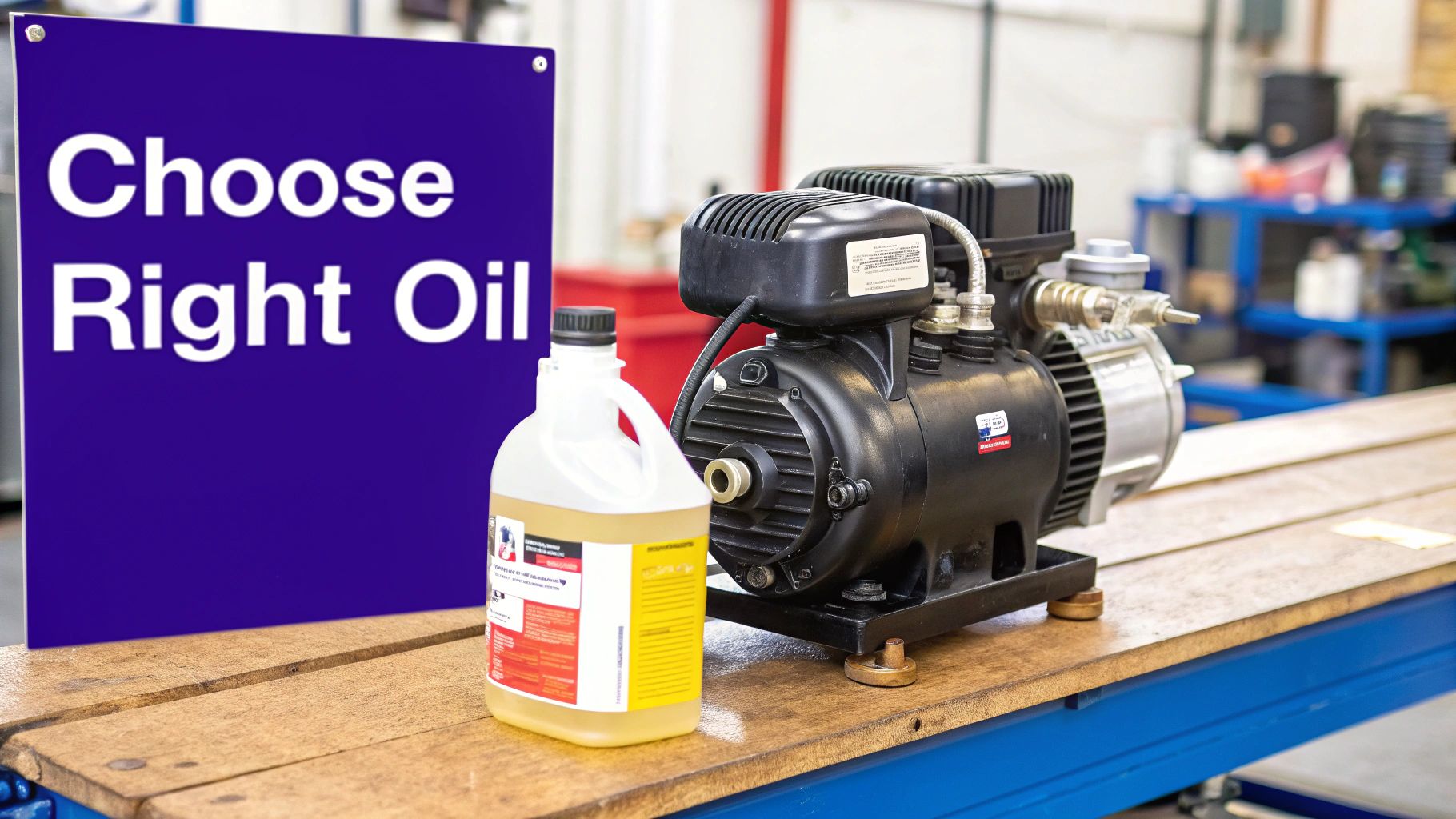
Think of your compressor as a high-performance engine. You wouldn't pour diesel into a gasoline car and expect it to run, right? The same logic applies here. Your Ingersoll Rand compressor is engineered for a specific lubricant designed to handle its intense pressures and temperatures. Using a subpar, generic oil is a recipe for premature wear and declining efficiency.
In the world of industrial air compressors, oil-filled models have always been the reliable workhorses, and Ingersoll Rand is a name synonymous with quality. But even the best machine can be crippled by the wrong oil. We've seen it happen—a poor oil choice can cause 20-30% efficiency drops and trigger unplanned downtime that costs thousands of dollars per hour.
For professionals who rely on their equipment, like commercial painters or public works crews, a simple switch to a high-grade compressor oil can deliver a proven 15-25% boost in uptime. It's a small change that makes a huge difference.
Your Local Central Coast Service Partner
At Contractor's Maintenance Service, we get what’s at stake. We work with contractors, facility managers, and equipment rental shops every day, providing practical advice and the right products to protect their high-value assets. Our goal is simple: help you maximize your return on investment through smart maintenance and fluid selection.
You can browse our full line of top-tier maintenance fluids designed to keep your equipment in peak condition.
Choosing the right oil isn't just another maintenance task; it's a strategic decision that directly impacts your bottom line. Proper lubrication prevents costly repairs and keeps your projects on schedule.
We're proud to serve businesses all along the Central Coast, making sure you have local access to the parts and expertise you need, right when you need them. Our primary service areas include San Luis Obispo and its surrounding communities, such as:
San Luis Obispo
Paso Robles
Atascadero
Arroyo Grande
Pismo Beach
Morro Bay
Santa Maria
Whether you need the correct compressor oil for your Ingersoll Rand or an expert diagnosis, our team is here to support you.
How to Decode Ingersoll Rand Oil Specifications
Trying to make sense of your compressor’s manual can feel like you’re reading a foreign language. All those technical terms and codes might seem confusing, but they’re your roadmap to picking the right oil for your Ingersoll Rand machine. Get it right, and you prevent damage and keep your equipment humming, whether you're on a dusty construction site in Paso Robles or in a clean manufacturing plant in Santa Maria.
The single most important spec you'll see is viscosity, which is usually listed as an ISO VG (Viscosity Grade) number. Just think of viscosity as the oil’s thickness. Water flows easily because it has low viscosity, while honey pours slowly because its viscosity is high. Your compressor needs oil that’s just the right thickness—enough to create a strong protective film between moving parts, but not so thick that it’s hard to pump.
For businesses here in San Luis Obispo county, getting this balance right is everything. Oil that’s too thin simply won’t offer enough protection, which leads to metal-on-metal friction and serious overheating. On the other hand, an oil that’s too thick will strain the motor and kill your efficiency, especially during those cold startups on a foggy Morro Bay morning.
Base Oils and Additives
Beyond just thickness, the oil's actual recipe matters. Every lubricant starts with a base oil—either mineral or synthetic—and is then beefed up with a package of additives. Each additive has a very specific job, and they all work together like a specialized crew to protect your compressor.
Anti-wear agents: These form a sacrificial layer on metal surfaces to prevent them from grinding against each other under intense pressure.
Oxidation inhibitors: They act like a preservative, slowing down the oil's natural breakdown process at high temperatures to extend its life.
Rust and corrosion inhibitors: These are crucial for protecting internal metal parts from any moisture that condenses inside the system.
Demulsifiers: These additives are designed to separate water from the oil, making it easy to drain the water away before it causes problems.
The quality of the base oil and the sophistication of this additive package are what separate a generic oil from a high-performance lubricant truly designed for a hard-working Ingersoll Rand compressor.
Matching Oil to Your Machine and Job Site
The perfect oil for your Ingersoll Rand model also depends heavily on the type of machine and where it lives. A rotary screw compressor, which often runs continuously at high temperatures, needs an oil with fantastic thermal stability—usually a synthetic blend. A reciprocating (piston) compressor, with its constant start-stop operation, has entirely different lubrication demands.
Your operating environment is a huge piece of the puzzle. A compressor running in a clean, climate-controlled workshop in Atascadero has very different needs than one exposed to dust and wild temperature swings on a job site in Arroyo Grande.
We've put together a quick table to help you see how these factors come into play. It’s a simple guide to matching common Ingersoll Rand compressor types with the right oil grades for different environments.
Common Ingersoll Rand Oil Grades and Their Applications
Compressor Type | Common ISO VG Grade | Ideal Operating Environment | Primary Function of Oil |
|---|---|---|---|
Rotary Screw (Oil-Flooded) | ISO VG 32, 46, 68 | Indoor, climate-controlled facilities | Cools, seals, and lubricates rotors |
Reciprocating (Piston) | ISO VG 68, 100, 150 | Workshops, garages, intermittent use | Lubricates cylinders, pistons, and bearings |
Centrifugal (Oil-Free) | ISO VG 32 | Critical applications (food, pharma) | Lubricates gears and bearings only |
Portable Diesel Screw | ISO VG 46 (often synthetic) | Outdoor, variable temperatures | Resists contamination and temperature swings |
Ultimately, harsh conditions demand a tougher, more robust oil that can fight off contamination and perform reliably across a wide range of temperatures. Always start with your user manual, but don't forget to factor in your local conditions when choosing a lubricant. Making an informed choice is the best way to get peak performance and a long, productive life out of your investment.
Synthetic vs. Mineral Oil for Your Compressor
Choosing between synthetic and mineral oil for your Ingersoll Rand compressor isn't just a technical decision—it's a business one. The right choice really comes down to your specific application, how hard you run your equipment, and what your long-term goals are for maintenance and cost.
Think of it like choosing between a standard, reliable work truck and a high-performance vehicle. Both get the job done, but they're built to excel in very different conditions.
The Lowdown on Each Oil Type
Mineral oil is the traditional, budget-friendly option. It's derived directly from refined crude oil and provides solid lubrication and protection for standard-duty compressors. For a small shop in Atascadero or a maintenance garage in Arroyo Grande with intermittent use, mineral oil is often a perfectly suitable and cost-effective choice, as long as you stick to a regular maintenance schedule.
Synthetic oil, on the other hand, is an engineered lubricant designed from the ground up for superior performance under stress. While it does come with a higher upfront cost, it almost always delivers a better return on investment for demanding operations. Its uniform molecular structure provides unmatched stability in extreme temperatures, which helps reduce internal friction and significantly extend your service intervals.
When Does Synthetic Oil Really Make a Difference?
For a busy manufacturing plant in Santa Maria or a construction site near Paso Robles running a compressor 24/7, synthetic oil is the clear winner. These high-demand environments generate intense heat that can cause mineral oil to break down, forming damaging varnish or sludge inside your machine. Synthetic oil resists this thermal degradation far better, ensuring consistent protection when you need it most.
This visual guide breaks down the core components that differentiate compressor oils, highlighting viscosity, additives, and the base oil's origin.
Understanding these three elements is key to seeing why synthetics provide a much longer service life and better protection under tough operating conditions.
Ingersoll Rand's oil-injected screw compressors, which are a cornerstone of the stationary screw market, absolutely thrive on synthetics. The right synthetic oil can boost operational life by two to three times compared to mineral-based oils. For facility managers, this translates to real savings. Using the correct compressor oil for Ingersoll Rand machines can cut maintenance needs by 30%, according to industry benchmarks.
Conversely, using a subpar oil spikes friction, which can increase energy consumption by 10-15% and invite varnish buildup that slashes compressor capacity by as much as 20%.
To help you see the differences at a glance, here’s a straightforward comparison between the two oil types.
Comparing Synthetic and Mineral Compressor Oils
Feature | Mineral Oil | Synthetic Oil |
|---|---|---|
Performance | Good for standard, intermittent use. | Excellent for high-demand, continuous use. |
Temperature Stability | Breaks down faster at high temperatures. | Resists thermal breakdown, performs well in heat. |
Service Interval | Shorter intervals (approx. 2,000 hours). | Longer intervals (up to 8,000 hours). |
Initial Cost | Lower upfront cost. | Higher upfront cost. |
Long-Term Cost | More frequent changes, more downtime. | Fewer changes, less downtime, lower total cost. |
Protection | Adequate protection against wear. | Superior protection, reduces sludge and varnish. |
While mineral oil might seem like the cheaper option initially, the extended life and reduced maintenance needs of synthetic oil often make it the more economical choice in the long run.
Making the Right Choice for Your Operation
So, how do you decide? It all comes down to the total cost of ownership.
While mineral oil is cheaper per gallon, the longer change intervals of synthetic oil—often 8,000 hours versus 2,000 hours for mineral—mean fewer oil changes, less labor, and most importantly, reduced downtime for your business.
The real cost of an oil isn't what you pay for the jug; it's the cost of lost productivity when your compressor is down for service.
Here in San Luis Obispo, our team at Contractor's Maintenance Service helps businesses weigh these factors every day. We look at your specific equipment, duty cycles, and operating environment to recommend the lubricant that delivers the best value and reliability for your needs.
You can explore a deeper dive into how synthetic oil for your air compressor can lead to longer life and peak performance in our detailed guide.
A Practical Guide to Changing Your Compressor Oil
A timely oil change is one of the most effective ways to protect your Ingersoll Rand compressor and ensure it runs like a top for years to come. Think of it less as routine upkeep and more as a vital health check for your machine. This guide walks you through the process, keeping safety front and center from start to finish.

Before you even think about grabbing a wrench, the first job is to make the equipment safe. This is a non-negotiable step. Never, ever attempt to drain oil from a machine that's running or still pressurized.
Safety First: Preliminary Steps
Power Down: Kill the power to the compressor at the main breaker. This simple action prevents any nasty surprises or accidental startups while you're working.
Lockout/Tagout: Apply a lockout/tagout device to the power source. This is standard procedure in any industrial setting and ensures the machine can't be turned back on until you're done.
Depressurize the System: Open the drain valve on the air receiver tank and let all the stored air bleed out. Don't move on until that pressure gauge reads zero.
With the compressor safely powered down and completely depressurized, you're ready to get to the oil change itself. Have your drain pan, fresh oil, a new filter, and some clean rags handy to make the job go smoothly.
The Oil Change Process
The process is pretty straightforward, but it’s all in the details. Rushing these steps is a recipe for messy spills or, even worse, damaging your equipment. A methodical approach is the only way to go.
Drain the Old Oil: Find the oil drain plug, usually at the base of the crankcase. Get your drain pan in position, then remove the plug and let all the old oil drain out.
Replace the Filter: While the oil is draining, spin off the old oil filter. Take a dab of fresh oil and lightly lubricate the gasket on the new filter before you install it.
Refill with New Oil: Once the old oil is out, securely screw the drain plug back in. Remove the oil fill cap and slowly pour in the correct type and amount of compressor oil for Ingersoll Rand, just as your manual specifies. Fill it to the center of the sight glass—don't overfill.
Final Checks: Pop the fill cap back on, remove your lockout/tagout device, and restore power. Let the compressor run for a few minutes, then shut it down and check for any leaks around the drain plug or the new filter.
Pro Tip: Take a good look at the oil you drained. If it looks milky, you've probably got moisture contamination. If you see tiny metallic specks, that could signal internal component wear that needs immediate attention.
At Contractor's Maintenance Service, we know that for businesses in San Luis Obispo, Paso Robles, and Santa Maria, time is money. If you're not comfortable with the process or just don't have the time, our expert technicians are here to handle it. We provide professional maintenance services to make sure your Ingersoll Rand compressor gets the right oil and care every single time, keeping your operations humming along.
Troubleshooting Common Oil-Related Compressor Issues
Even with a perfect maintenance schedule, things can still go wrong. When they do, many common compressor problems trace directly back to the oil, which acts as a fantastic early warning system for your machine's health. If you learn how to read these signs, you can step in before a small hiccup turns into a catastrophic failure.

When you pull an oil sample, its appearance tells a story. Healthy oil is clear and amber-colored. But if you see anything else, it's time to put on your detective hat and figure out what’s going on—fast.
Identifying Common Warning Signs
Catching problems early is the name of the game. It minimizes downtime and saves you a fortune in repairs. Keep an eye out for these tell-tale signs during your routine checks, especially if you're working in the tough environments we see around San Luis Obispo and Santa Maria.
Milky or Cloudy Oil: This is the classic sign of water contamination. Humid air can cause moisture to condense inside the compressor, which emulsifies the oil and completely tanks its ability to lubricate.
Dark or Burnt-Smelling Oil: This points straight to oxidation. The oil has broken down because it got way too hot. The culprit could be anything from poor ventilation or a clogged cooler to simply using the wrong type of oil for the job.
Foaming Oil: If your oil looks like a bubble bath, air is getting whipped into it. This is often caused by using the wrong lubricant, overfilling the sump, or a contaminant that destroyed the oil’s anti-foaming additives.
Excessive Oil Carryover: Is your compressor drinking oil? It might be due to worn piston rings, a clogged oil separator, or you might just be using an oil with the wrong viscosity that’s too thin for the machine.
Sometimes, oil issues show up outside the machine, too. If your compressor starts developing leaks or releasing airborne oil particles, understanding the principles of effective oil mist monitoring becomes critical for workplace safety and compliance.
Diagnosing the Root Cause
Once you spot a symptom, the next step is finding where it came from. For construction contractors and equipment yards, it’s crucial to remember that oil isn't just filler; it's the 56.4% market driver for a machine's endurance. It’s why our CMS clients report 25% energy savings with premium Ingersoll Rand oils, a fact that mirrors the broader industrial market's growth.
An oil issue is rarely just an oil issue. It’s a symptom of an underlying mechanical or environmental problem that needs to be addressed. Ignoring it is like turning off a smoke alarm without checking for a fire.
Fixing these problems usually takes more than just a quick oil change. For milky oil, you have to find and stop the source of the moisture. For burnt oil, you need to figure out why things are overheating and improve the cooling. Our expert technicians are pros at diagnosing these complex issues, making sure you get the right fix the first time around.
Your Local Ingersoll Rand Service Partner in San Luis Obispo
In San Luis Obispo County, compressor downtime isn't just an inconvenience—it's a project-stopper. When your equipment goes down, you need a local partner who gets it. Someone who understands your machinery and the pressure you're under to keep things moving.
That’s where Contractor's Maintenance Service comes in. We’re the go-to team for Ingersoll Rand service and parts here on the Central Coast. We’re part of this community, and our goal is to deliver fast, no-nonsense solutions that get you back to work.
Serving San Luis Obispo and Surrounding Areas
Our mobile service trucks and fully stocked shop are ready to support businesses all over the county. Whether it’s an emergency breakdown or just routine maintenance, we’re just a phone call away.
We proudly serve San Luis Obispo and the surrounding cities and areas, including:
Paso Robles and the North County
Atascadero and its surrounding communities
San Luis Obispo and the city proper
Arroyo Grande and the Five Cities area
Pismo Beach, Grover Beach, and Oceano
Morro Bay and the coastal towns
Santa Maria and down to the Santa Barbara County line
Working with a local team like CMS means you get faster service, parts that are actually in stock, and support from technicians who know the area. We understand the unique demands of local industries, from the vineyards in Paso Robles to the construction sites in Santa Maria.
Your One-Stop Shop for Ingersoll Rand Needs
We offer a complete lineup of services to keep your equipment running like it should. That includes stocking the right genuine and compatible compressor oil for Ingersoll Rand machines, handling professional oil changes, running diagnostics, and providing full warranty support.
Having a local expert in your corner means less downtime and more productivity. We provide the parts and expertise you need, right when you need them.
Don't wait for a breakdown to figure out who to call. Learn more about our comprehensive maintenance services in San Luis Obispo and let us help you keep your operations running without a hitch.
Your Compressor Oil Questions, Answered
When it comes to compressor maintenance, the details matter. We get a lot of great questions from operators in San Luis Obispo and the surrounding areas, so we've put together some straightforward answers to the most common ones. Getting this right is the key to keeping your Ingersoll Rand equipment running like it should.
Can I Mix Different Types of Compressor Oil?
The short answer is no. You should never mix different brands or types of compressor oil.
It might seem like a harmless shortcut, but blending mineral and synthetic oils—or even different synthetic formulas—is a recipe for disaster. This can cause nasty chemical reactions that lead to sludge, foaming, and a serious drop in lubrication, which can quickly wreck your compressor. Always drain the system completely before you fill it with fresh oil.
How Often Should I Change My Compressor Oil?
There’s no single answer here—it all comes down to your compressor model, the type of oil you're using, and the conditions you’re operating in. Generally, synthetic oils give you a much longer service life than their mineral-based counterparts.
Your Ingersoll Rand owner’s manual is the best place to start for a specific recommendation. But if your compressor is working hard in a hot or dusty environment, like many job sites in Paso Robles or Santa Maria, you’ll probably need to change the oil more often to keep it properly protected.
Think of the manual's recommendation as a baseline. Harsh conditions accelerate oil breakdown, so proactive maintenance is key to preventing unexpected failures and costly downtime.
Is It Safe to Use Motor Oil in My Air Compressor?
Absolutely not. This is a common mistake that can lead to catastrophic failure.
Motor oil is loaded with detergents and additives designed for one thing: internal combustion engines. These same additives will cause carbon buildup (varnishing) on critical parts like your compressor’s valves. That buildup restricts airflow, tanks your efficiency, and eventually leads to a complete breakdown. Stick with lubricants specifically formulated for air compressors to protect your investment.
What Does Milky or Cloudy Compressor Oil Indicate?
If your compressor oil looks milky or cloudy, you’ve got water contamination.
This happens when moisture from the air condenses inside the compressor, a frequent issue in humid coastal areas like Pismo Beach or Morro Bay. Water kills the oil's ability to lubricate, which leads to internal rust and premature wear on bearings and other moving parts. If you see milky oil, drain and replace it immediately, then track down the source of the moisture to keep it from happening again.
At Contractor's Maintenance Service, we provide the expert advice and high-quality products you need to keep your equipment in top condition. For all your industrial equipment and maintenance needs, visit us at https://www.contractorsmaintenanceservice.com.



Comments