


Best Practices for power washer attachment for sidewalks: A Complete Guide
A grimy, stained sidewalk can kill your home’s curb appeal in an instant. The secret to getting a fast, streak-free clean isn't just more power—it's the right power washer attachment for sidewalks. These tools are the difference between a frustrating chore and a satisfying project, letting you blast away years of dirt, algae, and grime with surprising ease.
From Grimy to Gleaming: A Better Way to Clean Sidewalks
Let's be honest, nothing makes a property look more neglected than a dirty, discolored walkway. Over time, concrete and stone just naturally collect layers of dirt, moss, and mildew. When it gets wet, that buildup can become a slippery, hazardous mess.
Sure, you can try to clean it with a standard power washer wand, but you’ll probably end up with a mess of ugly lines or "tiger stripes." It also takes forever.
This is where a dedicated sidewalk cleaning attachment completely changes the game. Think of it like this: you wouldn't paint a whole room with a tiny artist's brush, right? You’d grab a roller. A sidewalk cleaner works the same way, covering more ground, more evenly, in a fraction of the time. These attachments are built specifically for flat surfaces, giving you a consistent, professional-looking finish every single time.
For anyone on the Central Coast, from San Luis Obispo to Paso Robles and Atascadero, that coastal air means algae and mildew are a constant battle. Regular cleaning isn't just about looks; it's a necessity for safety and maintenance.
Serving San Luis Obispo County
We’re here to help keep your property looking its best with professional cleaning services and equipment. Our service area covers the entire region, including:
San Luis Obispo
Arroyo Grande
Pismo Beach
Grover Beach
Morro Bay
Paso Robles
Atascadero
And all surrounding communities
Keeping your exterior surfaces clean is one of the best ways to maintain your property's value and beauty. If you're interested in the different types of surfaces that benefit from this care, this guide on Patios and Walkways is a great resource.
The right tool doesn't just make the job easier; it fundamentally changes the quality of the result. For sidewalks, an attachment is the key to moving from a spotty clean to a uniformly pristine surface.
In this guide, we'll walk you through the different types of attachments out there, how to pick the perfect one for your power washer, and the best techniques to restore your sidewalks and make your whole property shine.
How to Choose the Right Sidewalk Cleaning Attachment
Picking the right power washer attachment for a sidewalk job is the single most important decision you'll make. Get it wrong, and you're left with a streaky, uneven mess—or worse, permanent damage to the concrete. It’s like trying to water an entire lawn with a tiny spray bottle; you need the right tool to get efficient, even coverage.
Not all attachments are created equal. Each one has a specific job it's built for, and matching the tool to the task is what separates a professional-looking clean from an amateur one. This is especially true for property owners here on the Central Coast, from San Luis Obispo and Paso Robles to communities like Pismo Beach and Morro Bay, where the damp air can lead to some seriously stubborn algae and mildew.
The Heavy Hitters: Surface Cleaners
For big, flat areas—which covers most sidewalks and driveways—the surface cleaner is your absolute best friend. Think of it as a lawnmower for your concrete.
This attachment glides over the surface on a hooded, circular disc that houses two or more high-pressure nozzles spinning like a whirlwind. This design gives you a perfectly consistent clean across a wide path, usually 12 to 20 inches, and completely gets rid of those ugly "tiger stripes" you get from a standard wand. As a bonus, the hood contains all the spray, keeping dirty water and debris from splashing all over walls, windows, and landscaping.
Precision Tools: Turbo Nozzles and Angled Wands
When you run into really stubborn, concentrated messes like oil spots, grime buried deep in cracks, or that rock-hard chewing gum, a surface cleaner might not have the focused punch you need. This is where a turbo nozzle (also called a rotary nozzle) comes into play. You can think of it as a precision laser for blasting away dirt.
A turbo nozzle takes the intense, pinpoint force of a 0-degree stream and spins it in a rapid circular motion. This gives you the raw power of a red nozzle but spreads it over a slightly wider area. It's fantastic for obliterating the tough stuff, but you need a steady hand. Get too aggressive, and you can easily etch or damage the concrete.
For those awkward spots, like cleaning under the lip of a sidewalk or getting into the curve of a curb, a simple angled wand is a lifesaver. It’s not fancy, but it gets the job done in places a straight wand just can't reach.
This quick decision tree helps visualize how to approach a dirty sidewalk.
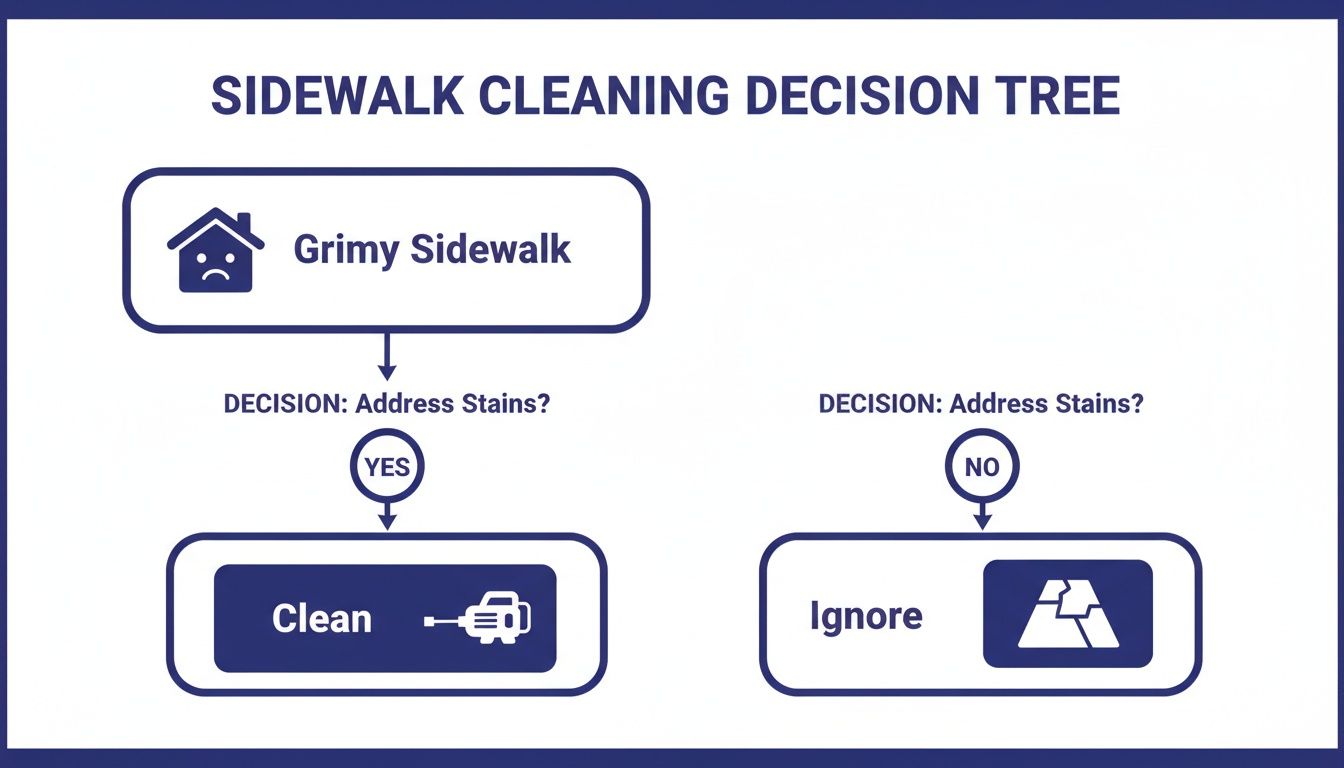
As you can see, grabbing the right tool and taking action is always going to give you a better result than just letting the grime build up.
Making the Right Choice for Your Property
Before you start blasting away, you need to know what you're cleaning. If your sidewalks are made of pavers, for instance, understanding the best pavers for patios and their durability can help you pick the right pressure and attachment.
There's a reason these tools are so popular. The global market for pressure washer accessories is booming, projected to hit USD 422.8 million by 2025. North America is a huge part of that, driven by contractors and homeowners who want efficient, versatile cleaning solutions.
To help you decide, here's a quick rundown of the most common attachments.
Sidewalk Power Washer Attachment Comparison
Attachment Type | Best For | Pros | Cons |
|---|---|---|---|
Surface Cleaner | Large, flat surfaces like sidewalks, driveways, and patios. | Fast, even cleaning; no striping; contains overspray. | Less effective on tough, concentrated stains or uneven surfaces. |
Turbo Nozzle | Stubborn stains, oil spots, hardened gum, and deep-set grime. | Extreme cleaning power; combines force with coverage. | Can easily damage surfaces if used incorrectly; slow for large areas. |
Angled Wand | Hard-to-reach areas like under ledges, curbs, and tight corners. | Simple and effective for awkward angles. | Not for general surface cleaning; requires manual effort. |
Each attachment has its place, and a well-equipped contractor will have all three ready to go.
Your choice of attachment directly impacts your efficiency and the quality of your results. A surface cleaner saves immense time on large areas, while a turbo nozzle provides the surgical power needed for the toughest stains.
At the end of the day, the nozzle is the heart of any attachment. Knowing the difference between a 15-degree nozzle for stripping old paint and a 25-degree nozzle for general cleaning is fundamental. For a complete breakdown, check out our guide to help you choose the right pressure washer nozzle and truly master your machine.
Matching Your Attachment to Your Power Washer
Getting a great clean without wrecking your concrete is all about creating a perfect match between your machine and your power washer attachment for sidewalks. Think of it like a sports team: you need both raw power and finesse to win. In our world, those two key players are PSI and GPM.
PSI (Pounds per Square Inch) is your brute force. It’s the heavy hitter, the punch that dislodges years of caked-on dirt, grime, and stains from the sidewalk’s surface.
GPM (Gallons Per Minute) is all about flow. This is the constant stream of water that swoops in and washes all that loosened debris away, leaving a sparkling clean surface behind. A high GPM is your secret weapon for speeding up work on big, flat areas.
Getting the balance wrong is a recipe for disaster. Too much PSI with not enough GPM will just etch or scar the concrete without actually cleaning it. On the other hand, high GPM with low PSI will just give the sidewalk a good soaking without lifting any of the real grime. A balanced combo is where the magic happens—it’s the key to an effective and safe clean every time.
Finding the Sweet Spot for Concrete
For most concrete sidewalks, you’ll want to stay in the 1500-3000 PSI range. This is the sweet spot. It's powerful enough to blast away tough buildup but gentle enough that you won't permanently etch or scar the surface. Pushing past 3000 PSI on typical residential concrete is just asking for trouble and can cause damage you can't undo.
This isn't just a casual recommendation; it's the industry standard. That 1500-3000 PSI range holds a massive 42.5% market share globally, making it the go-to for residential and light commercial work. With the U.S. pressure washer market hitting USD 584 million in 2024 and climbing, more and more attachments are being designed to work perfectly within this zone. You can discover more insights about pressure washer market trends and find detailed statistics on their official site.
Decoding the Nozzle Color System
The nozzle is the heart of any attachment. It’s what shapes the water into a fan and dictates its intensity. Thankfully, most power washers use a universal color-code system that makes picking the right one a breeze. For sidewalks, you’ll be living with two main colors:
Green Nozzle (25-degree): This is your workhorse, the one you'll grab for general cleaning. The spray is wide enough to cover ground quickly but still has enough punch to lift most everyday dirt.
Yellow Nozzle (15-degree): When you run into stubborn spots like oil stains or deeply embedded grime, this is your guy. The yellow nozzle delivers a more concentrated, powerful blast to break that tough stuff apart.
Always start with the wider-angle nozzle (green) from a safe distance. Only switch to a more aggressive one (yellow) if you absolutely need it for a specific spot. This simple approach protects the concrete and gives you the best finish.
If you’re working with a wand or lance, knowing how to manage your distance and angle is just as crucial as your nozzle choice. For a deep dive into mastering this essential tool, check out our complete guide to the pressure washer lance. By matching your PSI, GPM, and nozzle correctly, you’ll have the confidence to pick an attachment that’s both safe for the surface and brutally effective on dirt.
Your Step-by-Step Guide to a Flawless Sidewalk Clean
Alright, you’ve got the right power washer attachment for sidewalks and you know the specs. Now for the fun part—actually blasting away all that grime. Getting professional, streak-free results is pretty straightforward when you have a solid process. Let's walk through the simple, actionable steps to get it done right and safely.
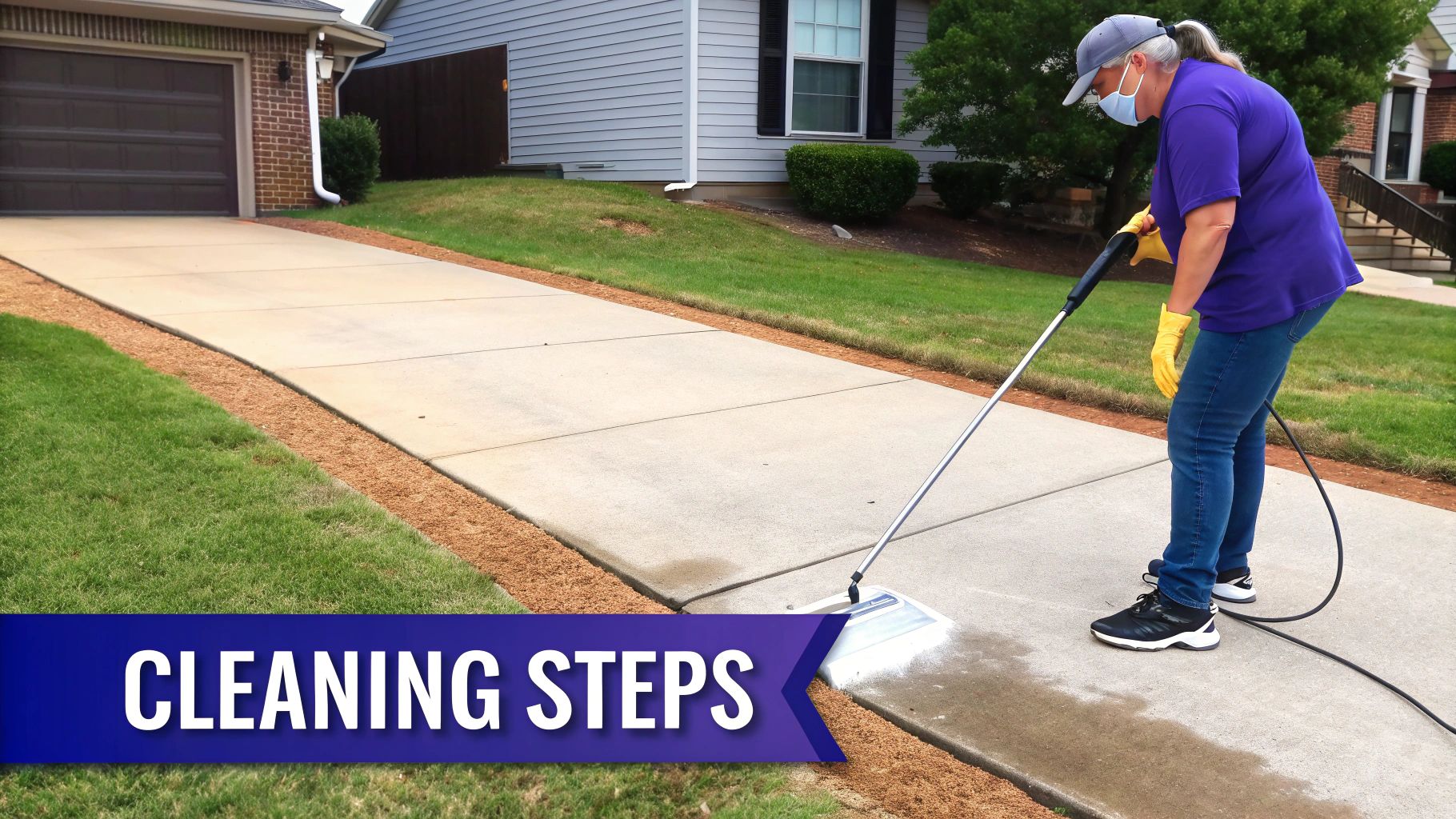
Think of this like painting a room. You wouldn't just grab a roller and start throwing paint on the wall, right? You’d do the prep work first—taping the edges, laying down drop cloths—to guarantee a clean, perfect finish. Same idea here.
Preparing the Cleaning Area
Before you even think about firing up the machine, the first job is to get the surface ready. A few minutes of prep work makes sure the power washer can do its job without any interruptions or, even worse, making a bigger mess.
Clear Debris: Get a broom and sweep away everything loose from the sidewalk. We’re talking leaves, sticks, little rocks, and anything else that could get in your way or turn into a high-speed projectile.
Protect Vulnerable Areas: Grab some plastic sheeting and cover up any nearby plants, doors, or outdoor electrical outlets. Even though surface cleaners keep overspray to a minimum, it's always better to be safe than sorry.
Inspect the Surface: Take a quick walk down the sidewalk and look for any big cracks or weak spots in the concrete. You'll want to ease up on the pressure in these areas to avoid making the damage worse.
Operating Your Attachment for a Streak-Free Finish
With the area prepped, you're ready to hook up your attachment and get to cleaning. The secret to that flawless, just-like-new look is all in the technique. You want deliberate, steady motions to avoid those dreaded "tiger stripes."
"Start with the widest nozzle first and maintain a consistent distance of at least 12-18 inches from the surface. This approach prevents accidental damage while you find the optimal pressure for the job."
If you’re using a surface cleaner, the whole process is incredibly forgiving. Just move in slow, steady, overlapping passes—kind of like you’re mowing the lawn. Let the tool glide over the concrete and allow the spinning nozzles inside do all the heavy lifting.
For those really tough spots that a surface cleaner just can’t lift, it’s time to bring in a more focused tool. A turbo nozzle is your best friend for deep-set oil stains or caked-on grime. The key here is to keep the nozzle moving continuously. Holding it in one spot for even a few seconds can etch the concrete. Maintain a steady hand and use a smooth, sweeping motion.
Finally, let’s talk safety, because it should always be your number one priority. Always wear your protective gear, including:
Safety Glasses: To shield your eyes from flying debris and water spray.
Closed-Toe Shoes: A good pair of boots is ideal to protect your feet from the high-pressure stream.
Gloves: For a better grip and to keep your hands protected.
For contractors and homeowners out in San Luis Obispo, Paso Robles, Arroyo Grande, and the nearby coastal communities, following these steps will guarantee a safe, efficient, and deeply satisfying clean every time.
Professional Sidewalk Cleaning in San Luis Obispo County
If you’re a homeowner or business on California's beautiful Central Coast, you know that keeping sidewalks clean comes with its own unique set of headaches. The salty, moist coastal air is a perfect breeding ground for stubborn algae, while our hard water leaves behind tough, chalky mineral stains that your average power washer just can't touch. And while a good power washer attachment for sidewalks is a start, getting that perfect, streak-free finish without damaging the concrete often takes commercial-grade gear and a bit of know-how.
For a guaranteed flawless result without the risk, calling in the pros is always your best bet. Why lose a weekend wrestling with rental equipment when a dedicated team can get the job done right, and fast?
We specialize in bringing sidewalks and other concrete flatwork back to life all across San Luis Obispo County. Our team rolls up with powerful, professional-grade surface cleaners and pressure washers that deliver a far better clean, much faster and more safely than the typical units you'd find at a hardware store.
Serving All of SLO County
From the North County vineyards to the southern beach towns, we’re here to make sure your property looks its absolute best. Our main service areas include:
San Luis Obispo
Paso Robles
Atascadero
Arroyo Grande
Pismo Beach
Grover Beach
Morro Bay
We also cover every community in between. When you hire a professional, you're not just saving time—you're protecting your property from the costly damage that can happen with the wrong pressure settings or attachments. We handle the gnarliest grime, from deep-set oil stains to that green organic growth that seems to pop up overnight, ensuring your home or business puts its best foot forward.
Choosing a professional service means you're not just cleaning your sidewalk; you're preserving its integrity and enhancing your property's curb appeal with a deep, lasting clean that DIY methods can't replicate.
This approach takes all the guesswork and back-breaking labor off your plate, giving you total peace of mind and pristine results. If you want to learn more, check out the details on our professional pressure washing in San Luis Obispo CA and see how we can completely transform your outdoor spaces. Let us do the dirty work so you can get back to enjoying your beautifully maintained property.
How to Maintain Your Power Washer Attachments
Just like changing the oil in your truck, taking proper care of your power washer attachment for sidewalks is the best way to protect your investment. A few simple maintenance habits can be the difference between years of reliable performance and a frustrating breakdown in the middle of a job.
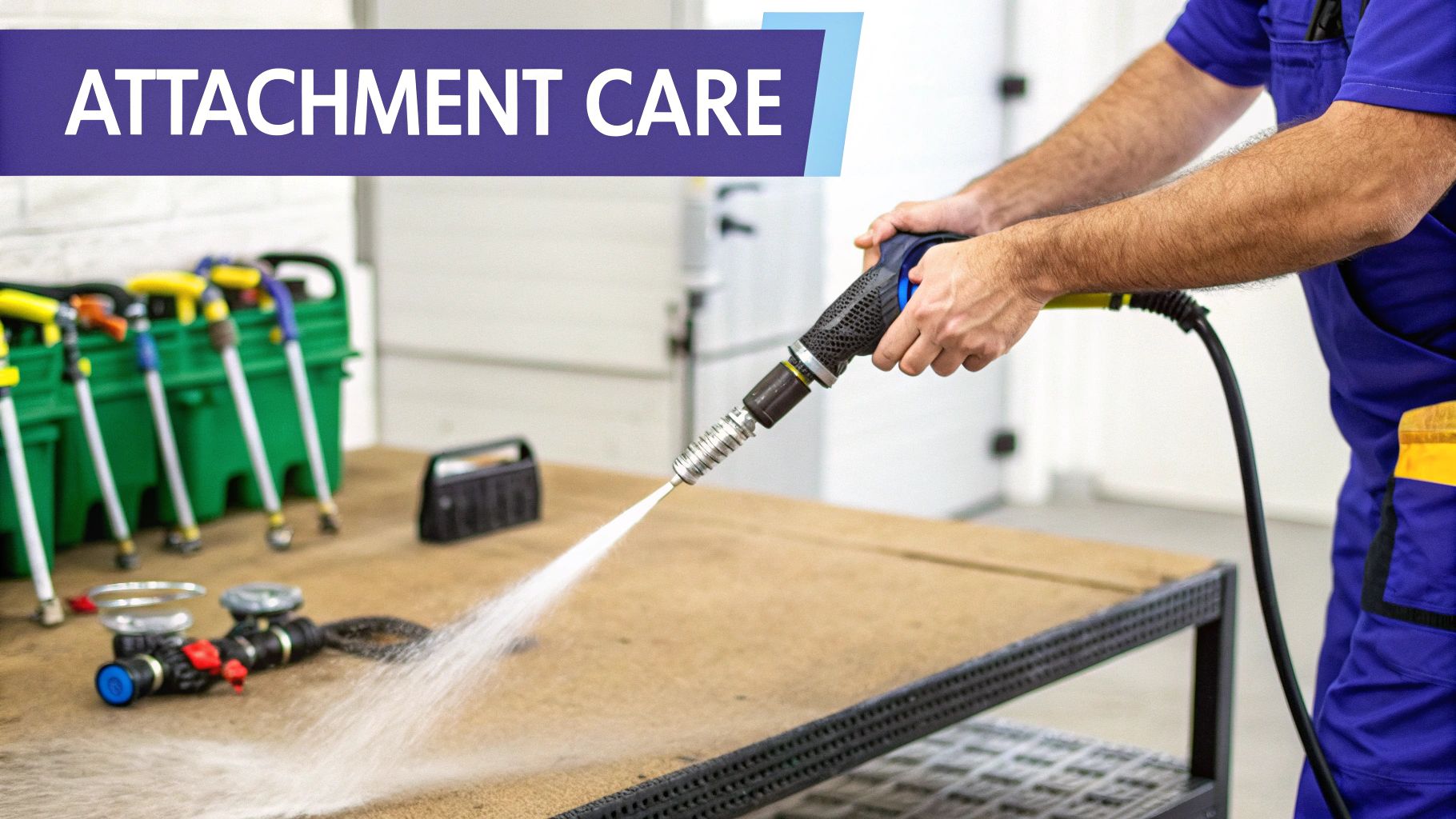
The single most important step? Flush the attachment with clean water after every single use. This quick rinse clears out leftover detergent and tiny bits of grit that can gum up the works. Honestly, clogs are the number one killer of these attachments.
Routine Inspection and Care
Every so often, give your nozzles a good look. High-pressure water is incredibly abrasive, and over time, it will literally erode the nozzle opening, making it wider. When that happens, your effective pressure drops, and you'll start seeing ugly, streaky lines on the concrete instead of a clean, uniform finish.
"A well-maintained attachment not only performs better but also protects the power washer itself from unnecessary strain. A clogged nozzle can cause pressure to build up in the pump, leading to premature wear on the entire system."
This isn't just a minor issue; it's a huge focus for manufacturers. Surface cleaners are a major reason the global high-pressure washer market is expected to climb to USD 7.0 billion by 2035. The constant wear and tear from high-pressure use means nozzles are a recurring replacement cost for contractors. Because of this, the big brands are pouring R&D into stronger seals and more durable materials to make these essential tools last longer. You can learn more about the pressure washer surface cleaner market and where it's headed.
Quick Troubleshooting Checklist
If your attachment starts acting up, run through this checklist before you call for backup. You can solve most problems right on the spot.
Surface Cleaner Won't Spin: Nine times out of ten, this is a clogged nozzle. Grab a nozzle cleaning tool (or even a small paperclip in a pinch) and clear any debris from both spray tips. Make sure they're equally clean, or the spray bar will be unbalanced.
Low or Uneven Pressure: This usually points to worn-out nozzles. If they look visibly wider or eroded compared to a new set, it’s time to replace them. Also, double-check that all your connections are cranked down tight.
Leaking from Connections: Take a look at the O-rings inside the quick-connect fittings. These little rubber rings are cheap and easy to replace but can cause major leaks when they dry out, crack, or get lost.
For all the pros working from San Luis Obispo to Paso Robles and Atascadero, good maintenance means your gear is always ready to make you money. And if you're in Arroyo Grande or Pismo Beach and hit a snag you can’t fix, our team is here to help get your equipment diagnosed and repaired, fast.
Common Questions About Cleaning Sidewalks
Even with the best gear, questions come up on the job. Getting the details right when using a power washer attachment for sidewalks can save you from costly mistakes and headaches, especially with the kinds of surfaces we see here on the Central Coast.
Can I Use an Attachment on an Old or Cracked Sidewalk?
Yes, but you have to be smart about it. When you're dealing with older concrete that already has cracks or spalling, the last thing you want to do is make it worse.
Dial back the pressure—stay under 2000 PSI—and use a wide, 40-degree (white) nozzle. Better yet, a surface cleaner is your safest bet. It spreads the pressure out evenly, unlike a direct nozzle that can zero in on a weak spot and blast it apart. Always test your setup on a small, hidden patch first. It's a simple step that could save you from ruining an entire slab.
Do I Need Detergents When Cleaning My Sidewalk?
For general dirt and grime, pure water pressure is often all you need. But for the tough stuff—like oil spills, grease, or that stubborn algae we constantly battle in San Luis Obispo and coastal spots like Pismo Beach and Morro Bay—a concrete-safe detergent is a game-changer.
First, apply your cleaning solution with a low-pressure (black) soap nozzle. Let it soak for a few minutes to really break down the stain. Then, switch to your surface cleaner or a 25-degree nozzle to wash it all away for a deep clean.
What Is the Difference Between Residential and Commercial Surface Cleaners?
It really comes down to durability and how much power they can handle. Commercial-grade surface cleaners are built to take a beating day in and day out. They usually have steel or heavy-duty composite housings, beefy wheels, and internal parts made to handle the high PSI of gas power washers.
Residential models, on the other hand, are typically made of high-impact plastic. They’re fine for occasional use with an electric power washer but just won't hold up to the demands of a professional job. For any contractor working in Paso Robles, Atascadero, or Arroyo Grande, a commercial-grade attachment isn't just an upgrade—it's a necessary investment for reliable performance.
For expert advice, parts, or repairs on your power washer equipment in San Luis Obispo County, trust Contractor's Maintenance Service. Visit us at https://www.contractorsmaintenanceservice.com to keep your gear running strong.
Comments