


Top 10 Preventive Maintenance Best Practices for 2025
In the world of contracting and industrial operations, unplanned downtime isn't just an inconvenience; it's a direct hit to your bottom line. Waiting for equipment to fail is a reactive, expensive, and outdated approach. The most successful teams operate proactively, leveraging strategic preventive maintenance to maximize uptime, extend asset life, and ensure operational safety. This guide moves beyond the generic advice and dives into proven preventive maintenance best practices that deliver tangible results.
This listicle is designed for action. We will explore how to transform your maintenance program from a cost center into a powerful competitive advantage. You will learn how to implement a modern Computerized Maintenance Management System (CMMS), adopt predictive analytics, and establish a robust spare parts inventory system. These strategies form the bedrock of a resilient, efficient, and profitable operation.
We will provide a clear, comprehensive checklist with actionable steps you can implement today. Whether you're managing a fleet of Graco sprayers, heavy-duty Multiquip compactors, or custom hydraulic systems, mastering these practices is key to thriving in a competitive environment. Gaining control over your equipment's health means gaining control over your schedule, budget, and reputation. For all your maintenance needs, from essential parts to expert service, explore our full range of solutions at Contractor's Maintenance Service. Let's get started.
1. Predictive Maintenance Using IoT Sensors and Data Analytics
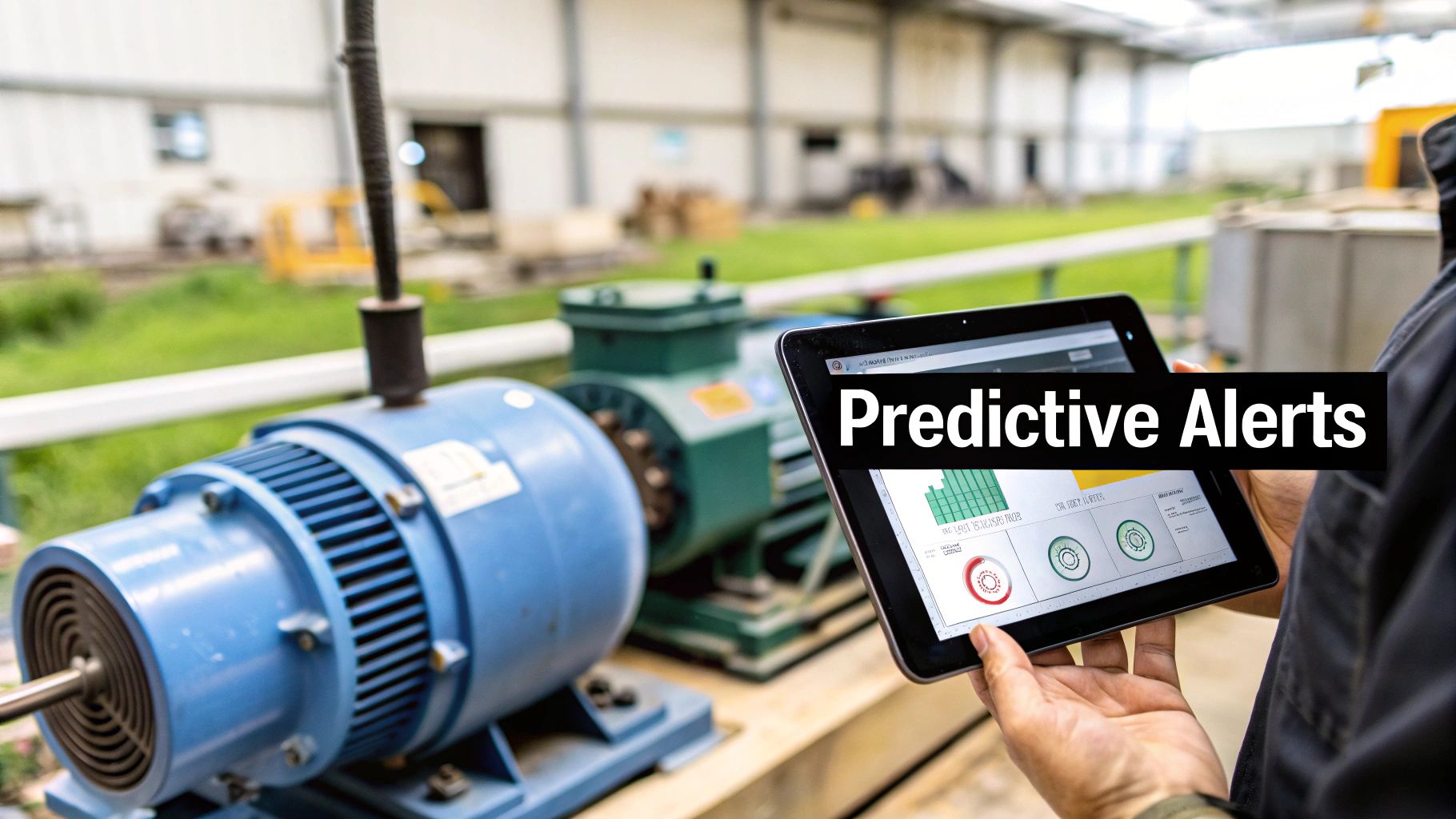
Predictive Maintenance (PdM) represents a significant evolution from traditional preventive schedules. Instead of performing maintenance at fixed intervals, PdM uses Internet of Things (IoT) sensors and advanced data analytics to continuously monitor equipment health in real-time. This data-driven approach allows your team to forecast potential failures with remarkable accuracy, enabling you to service machinery precisely when needed, not just when the calendar says so.
By collecting data on variables like vibration, temperature, pressure, and oil viscosity, machine learning algorithms can identify subtle patterns that precede a breakdown. This proactive strategy is one of the most effective preventive maintenance best practices because it minimizes unnecessary interventions, reduces unexpected downtime, and extends the operational life of your most valuable assets.
How to Implement Predictive Maintenance
Implementing a PdM program requires a strategic approach. It’s not just about installing sensors; it's about building a system that turns raw data into actionable intelligence. For example, a large-scale painting contractor could use vibration sensors on their industrial sprayers to detect early signs of motor bearing wear, preventing costly failures mid-project. Similarly, a power plant can monitor turbine vibrations to preempt catastrophic blade damage.
To get started, follow these actionable steps:
Prioritize Critical Assets: Begin your PdM rollout by focusing on your most critical and failure-prone equipment. This ensures a faster return on investment and demonstrates the value of the program to stakeholders.
Ensure Proper Sensor Integration: The accuracy of your predictions depends entirely on the quality of your data. Work with specialists to ensure sensors are correctly calibrated and placed in locations that yield the most insightful readings.
Establish Data Baselines: Don't expect perfect predictions overnight. Your system needs time to collect historical performance data to build a reliable baseline of normal operational parameters.
Set Clear Alert Thresholds: Define specific data points that will trigger a maintenance alert. For instance, a temperature increase of 15% above the baseline might trigger an inspection, while a 25% increase could prompt an immediate shutdown and repair order.
Train Your Team: Your technicians need to understand how to interpret the analytics dashboards and respond to alerts. Proper training transforms data from a passive report into a powerful maintenance tool.
While setting up a comprehensive PdM system is a significant undertaking, the long-term benefits are substantial. For essential components and parts needed to act on these predictive alerts, explore our full inventory at Contractor's Maintenance Service.
2. Computerized Maintenance Management System (CMMS) Implementation
A Computerized Maintenance Management System (CMMS) is the digital backbone of any modern, organized preventive maintenance program. This software centralizes all maintenance information, transforming scattered spreadsheets and paper records into a streamlined, actionable database. It tracks assets, schedules PM tasks, manages work orders, and maintains a comprehensive equipment history, giving you complete control over your operations.
Implementing a CMMS is one of the most foundational preventive maintenance best practices because it automates scheduling and record-keeping, ensuring that no task is overlooked. By creating a single source of truth for your entire team, you can drastically improve efficiency, enhance accountability, and make data-driven decisions about repairs and replacements.

How to Implement a CMMS
Effective CMMS implementation is about more than just buying software; it involves structuring your maintenance data and processes for maximum efficiency. For example, a facilities management company could use a CMMS like IBM Maximo to schedule and track routine HVAC filter changes across multiple buildings, automatically generating work orders and logging completion. Similarly, a municipal public works department can use it to manage preventive maintenance schedules for its entire fleet of vehicles, from street sweepers to snowplows.
To get started, follow these actionable steps:
Start with Critical Assets: Don't try to log every piece of equipment at once. Begin by inputting your most critical or problematic machinery to demonstrate immediate value and secure team buy-in.
Establish Clear Naming Conventions: Create a standardized system for naming assets, parts, and task types. This consistency is crucial for preventing data duplication and ensuring accurate reporting down the line.
Leverage Mobile Features: Choose a CMMS with a strong mobile app. This empowers technicians to access work orders, log notes, and update task statuses directly from the field, which significantly boosts compliance and data accuracy.
Schedule Regular Data Audits: Your CMMS is only as good as the data within it. Plan for periodic audits to clean up outdated records, correct errors, and ensure the information remains a reliable resource for decision-making.
Integrate with Inventory and Purchasing: Connect your CMMS to your parts inventory. This allows the system to automatically track parts used for repairs and can even trigger purchase orders when stock runs low.
By centralizing your maintenance operations with a CMMS, you create a robust framework for reliability. To ensure your team always has the necessary components for scheduled work orders, browse our extensive inventory at Contractor's Maintenance Service.
3. Condition-Based Maintenance (CBM) Monitoring
Condition-Based Maintenance (CBM) is a highly efficient strategy that bridges the gap between time-based preventive schedules and data-intensive predictive models. It triggers maintenance activities only when specific indicators show that equipment performance is degrading or that a failure is imminent. Instead of relying on a fixed calendar, CBM uses real-world measurements and inspections to determine the actual condition of your assets.
This approach is one of the most practical preventive maintenance best practices because it justifies every maintenance action with hard data, such as a change in vibration, a spike in temperature, or deteriorating oil quality. By acting only when necessary, you avoid the cost of premature component replacement and the risk of unexpected failures, optimizing both labor and parts usage.
How to Implement Condition-Based Maintenance
Implementing CBM involves a shift from "when to do it" to "what to look for." For example, a commercial painting contractor can use thermal imaging on electrical panels for their spray rigs to detect overheating connections before they cause a fire or system failure. Similarly, a public works department can use oil analysis on heavy machinery to identify coolant leaks or metal particulates, signaling internal engine wear long before a catastrophic breakdown.
To get started, follow these actionable steps:
Establish Baseline Measurements: Before you can spot a problem, you must know what "normal" looks like. Capture data like temperature, vibration, and pressure when your equipment is running in optimal condition to create a reliable performance baseline.
Schedule Regular Monitoring: Consistency is key. Create a schedule for technicians to perform regular checks using specific tools like thermal cameras, vibration analyzers, or oil sampling kits.
Train Technicians on Warning Signs: Equip your team to recognize subtle indicators of impending failure. This includes training on how to use monitoring tools and interpret the data they provide. For instance, knowing the specific pressure drop that indicates a clogged filter is crucial.
Set Clear Alert Thresholds: Define the specific measurement limits that will trigger a maintenance work order. An established threshold, such as a 10% increase in vibration from the baseline, removes guesswork and ensures timely action.
Document All Condition Data: Maintain a detailed log of all measurements. This historical data is invaluable for identifying trends over time, helping you refine alert thresholds and improve failure prediction accuracy.
This targeted maintenance approach ensures critical components, like hydraulic lines and fittings, are managed effectively. For more insights, learn more about hose safety and operational reliability. To source the high-quality parts needed for your CBM program, browse our complete inventory at Contractor's Maintenance Service.
4. Preventive Maintenance Scheduling and Planning
A systematic approach to scheduling is the backbone of any effective maintenance program. Preventive Maintenance (PM) scheduling involves creating a structured calendar for routine tasks based on time, usage, or performance triggers. Instead of reacting to breakdowns, this method establishes fixed intervals for inspections, lubrications, and part replacements, ensuring equipment is serviced before it has a chance to fail.
This proactive discipline is one of the foundational preventive maintenance best practices because it brings order and predictability to your operations. By adhering to a well-defined schedule based on manufacturer recommendations and operational data, you can systematically reduce equipment deterioration, prevent the vast majority of unexpected failures, and ensure consistent performance across all your assets.
How to Implement PM Scheduling and Planning
Effective scheduling moves maintenance from a chaotic, reactive process to a planned, strategic one. It requires a deep understanding of your equipment's needs and your operational tempo. For instance, a commercial painting contractor would schedule full service for their airless paint sprayers during the slow winter season, while a municipal public works department might schedule vehicle fleet maintenance based on 10,000-mile intervals to avoid disrupting essential services.
To build a robust PM schedule, follow these actionable steps:
Review Manufacturer Recommendations: Start with the OEM manuals. They provide the most reliable baseline for maintenance intervals, fluid types, and component life expectancies for each piece of equipment.
Consider the Operating Environment: Adjust schedules based on real-world conditions. Equipment operating in dusty, high-temperature, or corrosive environments will require more frequent servicing than the manual suggests.
Schedule During Low-Production Periods: Plan major maintenance tasks during planned downtime, holidays, or seasonal lulls to minimize impact on productivity and revenue.
Create a Master Calendar: Use a CMMS or a shared digital calendar to provide all team members with a clear, centralized view of upcoming maintenance activities, assignments, and deadlines.
Adjust Schedules Based on Performance: Your schedule should not be static. Use maintenance records and inspection findings to refine your intervals. If a specific component is failing before its scheduled replacement, shorten the interval.
A well-planned schedule ensures that critical maintenance never falls through the cracks. To ensure you have the necessary components on hand for every scheduled task, stock up on essential parts from our inventory at Contractor's Maintenance Service.
5. Root Cause Analysis (RCA) for Failure Prevention
True preventive maintenance goes beyond simply fixing what's broken; it involves understanding why a failure happened in the first place. Root Cause Analysis (RCA) is a systematic problem-solving method used to identify the fundamental, underlying cause of an equipment failure. Instead of just treating the symptom, like a leaking hose, RCA helps you discover and correct the core issue, such as excessive vibration causing the hose to fatigue prematurely.
Adopting RCA is one of the most powerful preventive maintenance best practices because it helps break the cycle of recurring failures. By moving from a reactive "fix-it" mindset to a proactive "solve-it" approach, you can implement lasting solutions that prevent the same problem from happening again, significantly boosting equipment reliability and reducing long-term repair costs.
How to Implement Root Cause Analysis
Implementing RCA effectively means treating every significant failure as a learning opportunity. It’s a structured investigation, not a blame game. For instance, if an industrial paint sprayer's pump consistently fails, RCA might reveal the root cause isn't a faulty pump but rather improper cleaning procedures that leave behind abrasive material. Similarly, a manufacturing plant could use RCA to determine that frequent motor burnouts are caused by persistent voltage fluctuations from an overloaded circuit.
To integrate RCA into your maintenance workflow, follow these key steps:
Act Quickly: Begin the investigation within 48 hours of a failure. This ensures that evidence is preserved and the memories of the technicians involved are still fresh.
Assemble a Cross-Functional Team: Involve the operators, technicians, and engineers who directly interacted with the equipment. A diverse team prevents individual bias and brings multiple perspectives to the analysis.
Ask "Why" Repeatedly (The 5 Whys): Start with the problem (e.g., the motor overheated) and repeatedly ask "Why?" until you arrive at the fundamental cause. This simple technique often uncovers deep-seated process or system issues.
Document Everything: Meticulously record all findings, data points, and conclusions from your analysis. This documentation is crucial for tracking trends and verifying that your corrective actions are effective.
Implement Corrective and Preventive Actions (CAPA): Once the root cause is identified, develop and implement a formal plan to correct it. This might involve changing a procedure, upgrading a part, or providing additional training.
By systematically digging deeper into equipment failures, you can turn unexpected downtime into valuable insights. For any replacement components needed to implement your corrective actions, you can find a comprehensive selection at Contractor's Maintenance Service.
6. Reliability-Centered Maintenance (RCM) Framework
Reliability-Centered Maintenance (RCM) is a highly structured corporate-level methodology designed to determine the most effective maintenance strategy for any given asset. Instead of applying a one-size-fits-all schedule, RCM analyzes the functions of equipment and the potential consequences of failure. This systematic approach ensures that maintenance activities are directly aimed at preserving an asset's intended function, balancing cost, risk, and performance.
The core principle of RCM is to use the most cost-effective and applicable maintenance technique for each specific failure mode. This makes it one of the most comprehensive preventive maintenance best practices because it combines elements of predictive, preventive, and reactive maintenance into a single, cohesive strategy. The goal is to maximize reliability by focusing resources where they will have the greatest impact on operational stability and safety.
How to Implement a Reliability-Centered Maintenance Framework
Implementing RCM requires a deep, systematic analysis of your equipment and operational context. It is most valuable for complex systems where failures have significant safety, environmental, or economic consequences. For example, a large-scale industrial coating facility could use RCM to analyze its automated paint mixing and delivery system, identifying critical components whose failure could halt the entire production line and creating a tailored maintenance plan for each one.
To get started with an RCM approach, follow these key steps:
Select Critical Systems for Analysis: Begin the RCM process on your most critical assets, particularly those with a history of high failure rates or severe failure consequences. This targeted start maximizes initial impact.
Assemble a Cross-Functional Team: Form a dedicated RCM analysis team that includes operators, maintenance technicians, engineers, and reliability specialists. Diverse perspectives are crucial for a thorough analysis.
Conduct a Failure Modes and Effects Analysis (FMEA): Systematically identify all the ways an asset can fail (failure modes), the causes of those failures, and their effects on the system. This is the foundation of your RCM strategy.
Determine the Optimal Maintenance Task: For each identified failure mode, decide on the most appropriate maintenance task. This could be a condition-based task, a scheduled restoration, a scheduled replacement, or even a decision to allow it to run to failure if the consequences are negligible.
Document and Implement the Strategy: Clearly document all decisions, assumptions, and resulting maintenance plans within your CMMS. This creates a living document that guides your team's actions and can be updated over time.
RCM is a powerful framework that ensures every maintenance task is justified. For the specialized parts and components required to execute these carefully planned tasks, visit our complete inventory at Contractor's Maintenance Service.
7. Preventive Maintenance Training and Technician Development
Even the most advanced maintenance strategy is only as effective as the technicians who execute it. A continuous training and development program ensures your team has the skills, knowledge, and confidence to perform maintenance tasks safely and efficiently. This investment in human capital transforms your workforce from simply following a checklist into a proactive force for equipment reliability and operational excellence.
Well-trained personnel are the cornerstone of any successful maintenance plan. They can more accurately diagnose issues, correctly follow complex procedures, and adapt to new technologies. Investing in their development is one of the most fundamental preventive maintenance best practices because it directly improves the quality of every inspection, repair, and service, safeguarding your assets and reducing the likelihood of human error.
How to Implement Technician Training and Development
A robust training program combines theoretical knowledge with practical, hands-on application. It should be an ongoing process, not a one-time event. For instance, a construction company could partner with a manufacturer like Caterpillar for official diesel engine training to certify their mechanics. Similarly, an industrial coatings contractor can ensure their team is proficient with the latest Graco sprayer technology through OEM-led workshops.
To build a culture of continuous learning, follow these actionable steps:
Partner with Equipment Manufacturers (OEMs): Leverage the expertise of the companies that designed your equipment. OEM training provides invaluable, machine-specific insights that generic courses often miss.
Create Job Aids and Quick Reference Guides: Develop laminated, easy-to-follow guides for common PM tasks. These can be kept with the equipment, providing immediate support and ensuring procedural consistency.
Schedule Recurring Refresher Training: Skills can fade over time, and complacency can set in. Schedule annual or biannual refresher courses on critical tasks and safety protocols to keep your team sharp.
Implement Hands-On Simulations: Where possible, use simulations to train for high-stakes or infrequent repair scenarios. This allows technicians to practice in a controlled environment without risking damage to live equipment.
Encourage Cross-Training: Train technicians on multiple types of equipment. This creates a more versatile and resilient team, providing better coverage for staff absences or specialized repair needs.
A skilled team is your best defense against unexpected downtime. For more strategies on developing your maintenance crew, explore the various resources on the Contractor's Maintenance Service blog. To source the products your trained technicians need, browse our full catalog at Contractor's Maintenance Service.
8. Spare Parts and Inventory Management
Effective preventive maintenance is impossible without the right parts on hand when you need them. Strategic spare parts and inventory management ensures that your maintenance team has immediate access to critical components, turning a potentially lengthy shutdown into a quick and efficient repair. This system is about finding the perfect balance: having enough inventory to prevent delays without tying up excessive capital in parts that rarely get used.
An organized inventory system is one of the most fundamental preventive maintenance best practices because it directly minimizes downtime. Instead of waiting days for a replacement hose, fitting, or motor to arrive, your technicians can retrieve it from your stockroom and get critical equipment back online immediately. This proactive approach supports both scheduled maintenance and unexpected repairs, making your entire operation more resilient and productive.
How to Implement Spare Parts and Inventory Management
Implementing a robust inventory system involves more than just buying spare parts; it requires a structured approach to tracking, storing, and replenishing your stock. For example, a commercial painting contractor might keep critical pump seals, spray tips, and filters on hand to avoid project delays. Similarly, a manufacturing plant would stock spare motors and bearings for their most vital production line machinery to prevent costly halts in operation.
To get started, follow these actionable steps:
Prioritize with ABC Analysis: Classify your inventory into three categories. 'A' items are high-value, critical parts with a significant impact on operations; 'B' items are of moderate importance; and 'C' items are low-cost, high-volume consumables. Focus your primary management efforts on 'A' items.
Establish Min/Max Stock Levels: Set clear minimum and maximum quantities for each part. When inventory drops to the minimum level, it triggers a reorder. The maximum level prevents overstocking and unnecessary spending.
Organize and Label Everything: A disorganized stockroom is a major source of inefficiency. Use a clear labeling system with bins, shelves, and dedicated locations for each part. This ensures technicians can find what they need quickly.
Control Storage Conditions: Store parts according to manufacturer recommendations. Protect sensitive items like seals, O-rings, and electronics from humidity, extreme temperatures, and direct sunlight to prevent premature degradation.
Track Usage to Refine Forecasts: Monitor how frequently each part is used. This historical data is invaluable for refining your min/max levels and forecasting future needs more accurately, ensuring you stock what you truly need.
A well-managed inventory is the backbone of a successful maintenance program. For a comprehensive selection of high-quality replacement parts to build out your inventory, explore our full range of industrial equipment parts and all other products at Contractor's Maintenance Service.
9. Key Performance Indicators (KPIs) and Metrics Monitoring
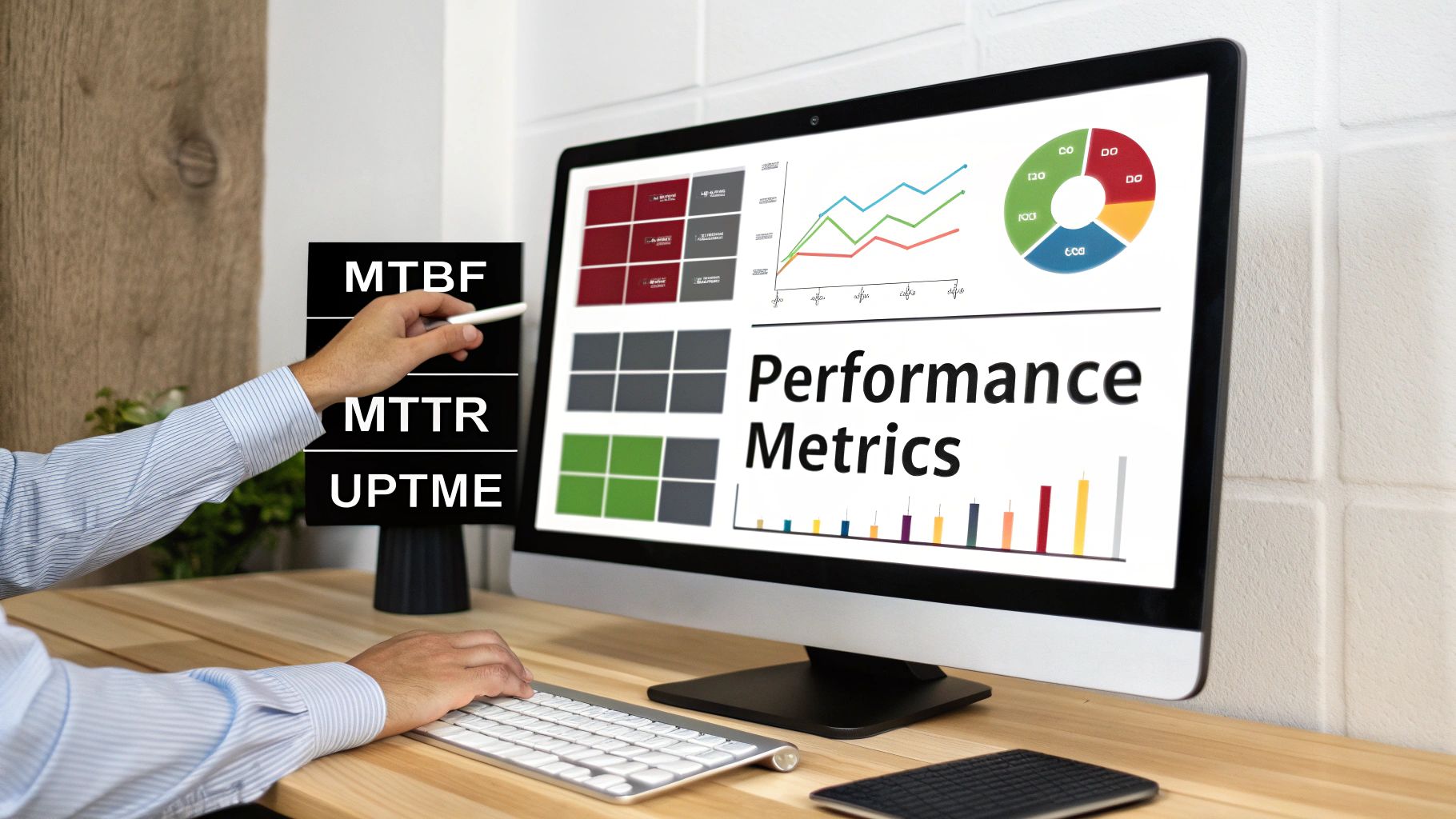
You can't improve what you don't measure. Establishing and tracking Key Performance Indicators (KPIs) provides an objective, data-driven view of your maintenance program's effectiveness. Instead of relying on guesswork, metrics like Mean Time Between Failures (MTBF) and Mean Time to Repair (MTTR) give you hard numbers to evaluate performance, justify budgets, and pinpoint areas for strategic improvement.
This analytical approach transforms your maintenance activities from a cost center into a value-driven operation. By consistently monitoring these metrics, you can validate the success of your strategies and demonstrate how effective maintenance directly impacts operational uptime and profitability. This focus on measurement is one of the most critical preventive maintenance best practices for achieving continuous improvement.
How to Implement KPIs and Metrics Monitoring
Implementing a metrics-driven maintenance program is about turning operational data into a clear performance scorecard. For instance, a commercial painting contractor can track the MTBF for their airless paint sprayers to determine which models are most reliable, informing future purchasing decisions. Similarly, a manufacturing plant can monitor Overall Equipment Effectiveness (OEE) to identify whether downtime is caused by equipment failure, material shortages, or operator issues.
Follow these actionable steps to start tracking your performance:
Establish a Baseline: Before you launch any new initiative, measure your current performance. Document your existing MTBF, MTTR, and equipment availability to create a benchmark you can measure future improvements against.
Align KPIs with Business Goals: Focus on metrics that directly contribute to your organization's primary objectives, such as maximizing equipment uptime, reducing repair costs, or improving safety compliance.
Set Realistic Targets: Use your baseline data and industry benchmarks to set achievable improvement goals. Aiming for a 10% reduction in MTTR in the first quarter is a more effective goal than a vague "improve repair times" directive.
Utilize Dashboards for Visualization: Use your CMMS or other software to create simple, visual dashboards. This makes it easy for your entire team to see performance at a glance and stay aligned on key objectives.
Review and Act Regularly: Schedule weekly or monthly meetings to review your KPIs. Discuss trends, celebrate successes, and brainstorm solutions for any metrics that are not meeting their targets.
A consistent focus on metrics ensures your maintenance efforts are always evolving and improving. To keep your KPIs trending in the right direction with reliable parts and components, see our complete inventory at Contractor's Maintenance Service.
10. Equipment Documentation and Maintenance History Records
Meticulous record-keeping is the backbone of any successful maintenance strategy. Maintaining a complete and accessible history of every asset, including all maintenance activities, repairs, and parts replacements, transforms reactive guesswork into informed decision-making. This detailed documentation provides a clear audit trail, supports regulatory compliance, and offers invaluable insights into equipment performance and total cost of ownership over time.
A comprehensive documentation system is one of the most fundamental preventive maintenance best practices because it empowers your team with data. When a paint sprayer fails, technicians can instantly review its service history to identify recurring issues, track part lifecycles, and avoid redundant diagnostics. This historical context is crucial for optimizing repair strategies, forecasting future needs, and ensuring every action is based on solid evidence, not just intuition.
How to Implement Strong Documentation Practices
Building an effective documentation system involves more than just filing away work orders. It requires a standardized process that ensures consistency and accessibility. For instance, a facilities management company can use digital logs to track HVAC system filter changes and repairs, providing a verifiable record for building code compliance. Similarly, an aviation maintenance team relies on meticulous logs to meet stringent FAA regulations, ensuring every component's history is accounted for.
To establish a robust record-keeping system, follow these actionable steps:
Digitize All Records: Transition from paper files to a digital system, such as a CMMS, to prevent data loss and make information easily searchable. Scan and upload historical documents to create a complete archive.
Standardize Naming Conventions: Implement a consistent naming system for assets, parts, and maintenance tasks. This ensures that everyone is recording and searching for information in the same way, preventing confusion.
Include Visual Documentation: Encourage technicians to include photos and short videos in their reports. A picture of a worn-out hose or a diagram of a complex repair can provide far more clarity than text alone.
Link Documentation to Inventory: Integrate your maintenance records with your parts inventory. When a component is replaced, the system should automatically update the equipment's history and adjust inventory levels.
Conduct Regular Audits: Schedule quarterly reviews of your maintenance logs to check for accuracy, completeness, and adherence to documentation procedures. Use these audits as a training opportunity to correct any inconsistencies.
By treating documentation as a critical asset, you create a powerful knowledge base that improves troubleshooting and strategic planning. For high-quality components and parts needed to complete documented repairs, visit our full inventory at Contractor's Maintenance Service.
10-Point Preventive Maintenance Comparison
Approach | Complexity 🔄 | Resources ⚡ | Expected Outcomes ⭐📊 | Ideal Use Cases 📊 | Key Advantages 💡 |
|---|---|---|---|---|---|
Predictive Maintenance Using IoT Sensors and Data Analytics | High — integration, ML, connectivity 🔄 | High — sensors, cloud, data engineers ⚡ | Very effective ⭐⭐⭐⭐ — significant downtime reduction, longer asset life 📊 | Critical assets, heavy industry, fleets, power generation 📊 | Real-time failure forecasting; data-driven alerts; remote monitoring 💡 |
Computerized Maintenance Management System (CMMS) Implementation | Medium–High — configuration & user training 🔄 | Moderate — software licenses, integrations, training ⚡ | Effective ⭐⭐⭐ — better uptime, fewer missed tasks, compliance reporting 📊 | Facilities, hospitals, manufacturing plants needing centralized ops 📊 | Centralized work orders, history logging, scheduling automation 💡 |
Condition-Based Maintenance (CBM) Monitoring | Medium — sensors/inspection programs, threshold tuning 🔄 | Moderate–High — monitoring devices, skilled analysts ⚡ | Highly effective ⭐⭐⭐⭐ — reduces unnecessary work, early warnings 📊 | Rotating machinery, electrical systems, oil analysis programs 📊 | Condition-driven tasks, optimized spend, prevents catastrophic failures 💡 |
Preventive Maintenance Scheduling and Planning | Low–Medium — calendar & usage planning 🔄 | Low–Moderate — planners, scheduling tools, technician time ⚡ | Effective ⭐⭐⭐ — predictable uptime, planned downtime management 📊 | HVAC, vehicle fleets, routine service items, building systems 📊 | Simple to implement; predictable maintenance windows; resource forecasting 💡 |
Root Cause Analysis (RCA) for Failure Prevention | Medium — structured investigations, facilitation 🔄 | Moderate — trained facilitators, time for analysis ⚡ | Very effective ⭐⭐⭐⭐ — eliminates recurring failures, targeted fixes 📊 | Recurrent failures, safety incidents, high-cost breakdowns 📊 | Identifies underlying causes; enables permanent corrective actions 💡 |
Reliability-Centered Maintenance (RCM) Framework | High — extensive FMEA and cross‑functional analysis 🔄 | High — expert teams, time, possible consultancy costs ⚡ | Very effective ⭐⭐⭐⭐ — optimizes spend, improves availability 📊 | High-consequence assets (aviation, power, pharma) 📊 | Risk-based, tailored maintenance plans; long-term optimization 💡 |
Preventive Maintenance Training and Technician Development | Low–Medium — curriculum design and scheduling 🔄 | Moderate — trainers, training time, materials ⚡ | Effective ⭐⭐⭐ — fewer errors, faster repairs, better safety 📊 | Organizations with complex assets or high technician turnover 📊 | Builds competency, improves compliance and problem resolution 💡 |
Spare Parts and Inventory Management | Medium — forecasting, stocking policies, systems 🔄 | Moderate — inventory capital, storage, tracking systems ⚡ | Effective ⭐⭐⭐ — reduced downtime from part shortages 📊 | Airlines, data centers, manufacturing, healthcare with critical spares 📊 | Faster repairs, lower emergency costs, supplier lead‑time mitigation 💡 |
Key Performance Indicators (KPIs) and Metrics Monitoring | Medium — baseline setting, dashboarding 🔄 | Low–Moderate — analytics tools, data collection effort ⚡ | Effective ⭐⭐⭐ — objective insights, guides continuous improvement 📊 | Any organization pursuing data-driven maintenance and benchmarking 📊 | Measures impact, supports budgeting and accountability 💡 |
Equipment Documentation and Maintenance History Records | Low–Medium — consistent documentation processes 🔄 | Low–Moderate — digitization tools, staff discipline ⚡ | Effective ⭐⭐⭐ — improves planning, compliance, failure analysis 📊 | Regulated industries, long‑lived assets, organizations using CMMS 📊 | Audit trails, supports RCA/CMMS, knowledge transfer and traceability 💡 |
Your Partner in Proactive Maintenance
Transitioning from a reactive, "fix-it-when-it-breaks" mentality to a structured, proactive maintenance culture is one of the most impactful operational shifts your organization can make. The journey outlined in this guide, from implementing a robust Computerized Maintenance Management System (CMMS) to leveraging predictive analytics, is not merely about ticking boxes on a checklist. It's about fundamentally transforming your approach to asset management, unlocking new levels of efficiency, and building a more resilient, predictable, and profitable operation. Embracing these preventive maintenance best practices is an investment in your company’s future, safeguarding your most valuable assets and empowering your team to work smarter, not harder.
The concepts we’ve explored, such as Reliability-Centered Maintenance (RCM) and Root Cause Analysis (RCA), push you beyond simple upkeep. They encourage a deeper understanding of your equipment’s failure modes and operational context. This shift in perspective turns maintenance from a necessary cost center into a strategic value driver. When technicians are empowered with advanced training and clear documentation, and when inventory is meticulously managed to prevent stockouts on critical parts, your entire workflow becomes more streamlined and less susceptible to disruptive, costly downtime.
Key Takeaways for Building a World-Class Program
Mastering these strategies requires a commitment to continuous improvement. Let’s distill the core principles into actionable takeaways:
Data is Your Foundation: Without accurate data from a CMMS, condition monitoring, and detailed maintenance records, you are operating in the dark. Data illuminates performance trends, justifies maintenance expenditures, and guides strategic decisions.
Proactive Over Reactive: Every best practice, from scheduled lubrication to predictive sensor alerts, is designed to catch potential problems before they escalate into catastrophic failures. This proactive stance saves money, protects assets, and enhances safety.
Empower Your Team: A successful preventive maintenance program is driven by skilled, knowledgeable technicians. Investing in ongoing training, clear documentation, and user-friendly systems like a CMMS is an investment in your people and, by extension, your operational excellence.
Systematize for Success: Consistency is paramount. Standardized checklists, scheduled maintenance plans, and well-defined KPIs create a reliable framework that ensures no task is overlooked and every action contributes to your overarching reliability goals.
The ultimate value of a world-class maintenance program is the confidence it inspires. It is the confidence to bid on larger projects, knowing your equipment won't fail you. It is the confidence to guarantee project timelines, knowing that unexpected downtime is a managed risk, not a constant threat. By implementing these preventive maintenance best practices, you are not just maintaining equipment; you are building a competitive advantage.
At Contractor's Maintenance Service, we understand this journey because we live it every day alongside contractors like you. As an authorized service center for industry leaders like Graco, Wagner/Titan, and Honda, we provide more than just parts; we provide the expertise and support needed to implement these strategies effectively. From diagnosing a complex hydraulic issue to fabricating a custom hose to get you back up and running, our team is an extension of yours. We stock the genuine parts, fluids, and accessories that your proactive program depends on.
Let us be your partner in building a maintenance program that drives success. Whether you are just starting to formalize your processes or are looking to integrate advanced predictive technologies, our team has the resources and knowledge to support your goals.
Ready to put these preventive maintenance best practices into action? Contractor's Maintenance Service is your one-stop source for the OEM parts, expert service, and custom solutions you need to build a truly proactive and resilient operation. Visit us at Contractor's Maintenance Service to explore our offerings and partner with a team dedicated to your uptime.
Congrats on the new graphic designer — it’s exciting to see fresh creative energy joining the Kanokla team. For anyone involved in onboarding or HR, I found https://tabulera.com/blog/hr-best-practices-guide to be a concise, practical guide for setting up smooth introductions and clear expectations. Can’t wait to see the new designer’s projects on the site!
Great piece on AI and cybersecurity - for teams implementing AI in EU digital services, understanding how to test code is critical. I recommend checking a practical guide on dynamic vs static code analysis that clearly lays out the trade-offs and helps choose the right approach for secure AI deployments.
What's up guys! Preventive maintenance is the holy grail of keeping a business alive but honestly, if you are still using Excel sheets to track machinery wear in 2026, you are living in the stone age. How do you prevent a breakdown if you don't even know where the spare parts are located? I was losing my mind over this exact issue with our fleet maintenance schedules until I decided to completely overhaul our hardware monitoring system by implementing the IoT tools from a company here because their live sensor data allowed us to predict component failures before the machines actually caught fire. We saved over 5000€ on emergency repairs last month alone just by knowing the exact temperature fluctuations…